
-
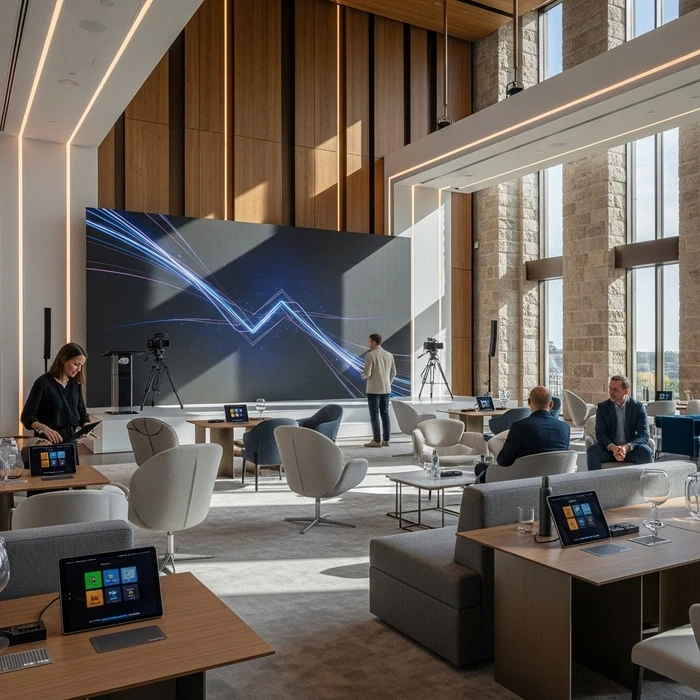
Your remote attendees are checking email by minute twelve. Your in-room audience is fully engaged, leaning into the keynote. Same event. Two completely different experiences. This gap is the single biggest failure point in hybrid event design across the Middle East corporate market today.
Event planners in Dubai, Riyadh, and Doha face this exact tension. The physical audience absorbs the energy, the networking, the full production. The virtual audience gets a webcam stream and a chat box nobody monitors. That is not a hybrid event. That is a live event with a camera bolted on.
This guide breaks down how to architect genuine experience parity across both audiences — from stagecraft and session choreography to content capture and hybrid networking formats — so every participant receives measurable value regardless of location.
Why Does Experience Parity Matter More Than Production Value?
The core challenge in hybrid events is not technical — it is experiential. Organizations investing heavily in AV production but ignoring two-audience facilitation consistently see lower remote engagement, undermining total event ROI and strategic reach.
The Real Cost of Ignoring Remote Experience
Microsoft's research on hybrid work dynamics shows remote participants disengage when they feel like passive observers. In a corporate context — board meetings in DIFC, product launches in Riyadh's King Abdullah Financial District, leadership summits at Doha's Msheireb Downtown — this translates directly into lost influence and wasted budget.
What Experience Parity Actually Means
Experience parity does not mean identical experiences. It means equal value delivery. The in-person attendee gains from physical networking and ambient energy. The remote attendee should gain from curated digital interactions, superior content access, and on-demand flexibility. Neither audience should feel secondary.
Why the Middle East Market Demands This Now
Regional corporate events are scaling fast. Organizations in the UAE and KSA routinely host audiences split across Abu Dhabi, Jeddah, and international offices simultaneously. Two-audience facilitation is no longer optional. It is the baseline expectation for any serious hybrid event programming effort in the Gulf region.
How Should You Structure a Run of Show for Hybrid Events?
A run of show hybrid event must contain parallel timelines — one for the room, one for the screen — synchronized at key engagement beats. Without this dual-track structure, remote audiences experience dead air during in-room transitions.
Dual-Track Agenda Architecture
Every segment on your hybrid event run of show needs two columns: what the room sees and what the stream sees.
When the room takes a coffee break, the stream should receive a moderated Q&A, a behind-the-scenes interview, or a curated session replay.









Agenda Pacing for Different Attention Spans
Agenda pacing differs sharply by channel. In-room audiences tolerate 45-minute keynotes. Remote audiences need state changes every 12 to 15 minutes. Build your programming with studio segments, panel switches, or participant prompts at regular intervals to sustain virtual and in-person engagement simultaneously.
Scripting Every Transition
Dead air kills remote engagement faster than bad content. Script every transition explicitly. Assign a dedicated virtual host who bridges gaps, introduces upcoming segments, and acknowledges the online audience by name whenever possible. This single role transforms the hybrid attendee experience more than any technology upgrade.
Flaash Expert Insight: When planning hybrid events at venues like the Hilton Dubai Al Habtoor City or the Four Seasons Riyadh, request a separate "broadcast room" adjacent to the main hall. This gives your production team a controlled environment for studio segments and virtual-only content without disrupting the live audience.
For a broader planning framework, teams can also review Flaash's guide to hybrid corporate event planning before building the final agenda.
What Room Setup and Stagecraft Decisions Drive Equal Engagement?
Camera blocking, screen placement, and stage orientation must be designed for the lens first, then adjusted for the room — not the reverse. This priority shift alone transforms the remote viewing experience from passive to immersive.
Camera Blocking for Hybrid Production
Traditional event stagecraft positions the speaker for the room. Hybrid event design positions the speaker for both the room and the camera simultaneously. This requires tighter stage footprints, specific lighting angles, and confidence monitors placed where the speaker addresses both audiences naturally.
Screen and Monitor Placement
Mount a large LED screen at stage level showing remote attendees' faces. This creates psychological presence. Speakers at Doha's Sheraton Grand or Abu Dhabi's Yas Conference Centre who can see their remote audience deliver noticeably more inclusive presentations. Camera blocking becomes intuitive when the remote audience is physically visible.
Room Layout Considerations
Avoid deep, narrow room configurations. Wide, shallow rooms allow better camera angles and ensure in-room attendees do not obstruct sight lines. When sourcing venues — a process where Flaash provides tailored proposals as a free venue-finding service for corporate events across the Middle East — prioritize spaces with built-in broadcast infrastructure or flexible rigging points.
Also think through practical room flow: where cameras will be placed, whether there is enough backstage space for presenters, how the control desk connects to the main stage, and whether breakouts can happen without audio spill. These details matter just as much in Dubai, Abu Dhabi, Riyadh, Jeddah, and Doha as the headline venue brand.
Which Interactive Formats Keep Both Audiences Equally Invested?
The most effective hybrid event engagement ideas are purpose-built for two audiences from the start — not in-room activities retrofitted with a digital add-on. Native dual-channel design beats adaptation every time.
Breakout Formats That Cross Channels
Breakout formats should mix audiences deliberately. Assign small groups that include both in-room and remote participants together. Use platforms supporting video-enabled roundtables where physical attendees join from tablets stationed at their tables. This is where interactive sessions hybrid formats deliver their highest value.
Participant Prompts and Live Polling
Participant prompts — live polls, word clouds, scenario votes — must appear on both room screens and stream interfaces simultaneously. Results should be visible to everyone in real time. This shared data layer creates a unifying moment that bridges both audiences effectively.
Moderation as a Trained Skill
Moderation in hybrid events requires deliberate training. The moderator must manage room energy while actively pulling in remote voices at structured intervals. Harvard Business Review's research on running effective hybrid meetings confirms intentional facilitation is the single most important factor in balanced participation across channels.
Flaash Expert Insight: For corporate seminars in Jeddah and Riyadh, assign a dedicated "remote advocate" — a team member whose sole job is monitoring virtual chat, surfacing questions to the moderator, and ensuring remote attendees are called upon equally during every Q&A segment.
For more tactical inspiration, it helps to review proven remote attendee engagement ideas and adapt them into your live format rather than treating digital participation as a side channel.
How Do You Build a Hybrid Event Content Strategy That Serves Both Audiences?
A strong hybrid event content strategy creates three asset tiers: live-only moments, shared content, and on-demand exclusives — each designed to reward both audiences distinctly and justify their participation investment.
Live-Only Moments for the Room
Certain experiences — a CEO's off-the-record remarks, a tactile product demo, a networking dinner at the Address Sky View in Dubai — remain in-room exclusives. Acknowledge this openly. Honest expectations increase perceived value for physical attendance without alienating the remote cohort.
Shared Content With Dual Delivery
Keynotes, panels, and workshops must be produced for both channels simultaneously. Speaker coaching is critical here. Train presenters to address the camera at defined intervals, reference remote attendees explicitly, and eliminate "those of you in the room" language that alienates digital participants.
On-Demand Exclusives for Remote Audiences
Give remote attendees something the room does not receive: early access to session recordings, downloadable speaker decks, or exclusive post-event interviews. This content capture approach directly compensates for the experiential gap and forms a core pillar of your remote attendee engagement strategy.
Sponsored Sessions Done Right
Sponsored sessions in hybrid formats must deliver genuine value, not just brand exposure. Structure them as solution-oriented workshops or data briefings. Remote attendees will exit a thinly veiled sales pitch within seconds. In-room attendees are only marginally more patient.
A useful test is simple: if the session would not hold attention without the sponsor's logo, it is not strong enough. Good hybrid event programming rewards attention with insight, practical takeaways, or meaningful discussion.
What Hybrid Networking Formats Actually Create Meaningful Connections?
Effective hybrid networking formats use structured, time-boxed interactions with cross-channel pairing rather than relying on organic mingling that inherently excludes anyone not physically present in the room.
Structured Speed Networking
Use event platforms that pair one in-room and one remote attendee for five-minute video conversations. Station in-room participants at dedicated networking pods equipped with screens and headsets. This removes the awkwardness of trying to "Zoom in" to a cocktail reception.
Community Moments Between Sessions
Community moments — brief, facilitated icebreakers or collaborative group challenges — work powerfully between sessions. They maintain energy levels and give remote attendees a compelling reason to stay connected beyond passive content consumption. These micro-interactions often become the most remembered element of the hybrid attendee experience.
Practical Networking Design for Corporate Audiences
For B2B conferences, leadership summits, and client events, networking needs a reason to happen. Build around specific use cases: sector-based matchmaking, peer problem-solving tables, investor-founder pairings, or sponsor-led expert clinics. In Abu Dhabi and Doha, where many corporate events host multinational audiences, structured formats also help overcome the hesitation that can appear in open networking sessions.
Flaash Expert Insight: Hotels like the JW Marriott Marquis Dubai and the Ritz-Carlton Riyadh offer dedicated lounge areas convertible into hybrid networking pods. When you work with Flaash to source your venue, specify this requirement upfront — it significantly improves cross-channel connection quality and overall event satisfaction.
What Technology and Logistics Support Better Experience Parity?
Technology should reinforce the format, not define it. The best stack is the one that supports your audience journey clearly and reliably.
Essential Hybrid Tech Layers
Most corporate teams need five basic layers:
a stable streaming platform
room audio engineered for both in-person and online listening
interaction tools for polls, chat, and Q&A
backstage communication for presenters and producers
recording workflows for content capture
If your event team is evaluating vendors, this guide to the hybrid event technology stack is a useful place to start.
Speaker and Presenter Preparation
Even strong speakers often underperform in hybrid environments. They need speaker coaching on eye line, pacing, pausing for remote questions, and movement within the approved camera blocking zone. A rehearsal with both production and facilitation teams is not optional. It is where session choreography becomes real.
Remote Attendee Journey Planning
Remote participants need more than a joining link. They need a clear schedule, instructions for participation, tech guidance, and expectations for networking and follow-up. Using a pre-event checklist improves attendance quality and reduces support friction. Flaash's hybrid event checklist for remote attendees is a practical reference for that journey design.
How Do You Measure Whether Both Audiences Received Equal Value?
Measure hybrid event success by comparing engagement metrics and satisfaction scores between in-room and remote cohorts separately — never by aggregating them into a single blended number that masks critical experience gaps.
Engagement Metrics by Cohort
Track poll participation rates, chat activity, session attendance duration, and breakout room join rates independently for each audience. If remote engagement drops below 60% of your in-room rate, your hybrid event design has a structural problem. No amount of better content fixes a flawed architecture.
Post-Event Surveys With Segmented Analysis
Send different survey versions to each audience. Ask remote attendees specifically about interactive tools, content access quality, and networking satisfaction. Ask in-room attendees about production value and cross-channel interaction quality. Compare Net Promoter Scores between cohorts to find your gap.
Applying Insights to Future Programming
The delta between cohort scores is your improvement roadmap. A thorough post-event review of your format, facilitation, and tech decisions will show whether issues came from the venue, the programming, or the operating model. Over time, this is how teams improve hybrid event engagement ideas into repeatable event strategy.
Final Takeaway
Your next hybrid event in Dubai, Riyadh, Jeddah, Abu Dhabi, or Doha should not treat the remote audience as an afterthought. Design for two audiences from day one, with agenda pacing, session choreography, interactive tools, and hybrid networking formats built for parity.
That means choosing the right room setup, training moderators properly, planning a realistic run of show hybrid event, and building a hybrid event content strategy that respects both digital and physical participation. When the format is designed well, virtual and in-person engagement no longer compete. They strengthen each other.
And if venue selection is part of the challenge, Flaash.ae can help you find hybrid-ready corporate event spaces across the UAE, Saudi Arabia, and Qatar — with tailored proposals, expert support, and no cost to your team. In hybrid events, equal experience starts long before show day. It starts with the design decisions you make first.
FAQ: hybrid event design
What is hybrid event design?
Hybrid event design is the strategic planning and production of events that integrate in-person and virtual audiences into one seamless experience, combining venue layout, AV and streaming technology, and engagement tools so both onsite and remote participants can interact and consume content equally.
How do you plan a successful hybrid corporate event in the UAE, Saudi Arabia, or Qatar?
Start with clear audience segmentation and objectives, choose a venue with reliable internet and AV infrastructure, select a robust streaming platform, assign roles for virtual moderation, run full technical rehearsals, and localize content and timings for Gulf audiences.
What core technology is required for hybrid event production?
Essentials are high-quality cameras, professional audio and mixing, redundant high-speed internet, a secure streaming or virtual event platform, and engagement tools such as live Q&A, polls, and breakout rooms that work across devices and bandwidth conditions.
How can organisers boost engagement for both onsite and remote attendees?
Use synchronized interactive elements such as live polls, moderated Q&A, camera-enabled networking lounges, and hybrid-friendly session formats, plus a dedicated virtual host to acknowledge online attendees and bridge conversations between audiences.
How much does a corporate hybrid event typically cost in the Middle East?
Costs vary by scale and production level: a basic hybrid meeting can be relatively low-cost, while professionally produced conferences with multi-camera streaming, stage design, and translation services fall into moderate-to-high budgets. Obtain local quotes to factor venue, AV crew, streaming platform, and interpreting needs.
What venue features matter most for hybrid events in the Gulf region?
Prioritise venues with proven high-bandwidth internet with redundancy, on-site technical support, flexible room layouts, reliable power backup, and experience hosting hybrid productions. Major hotels and convention centres in Dubai, Abu Dhabi, Riyadh, and Doha commonly meet these requirements.
Recent Posts

Load More Blogs