
-
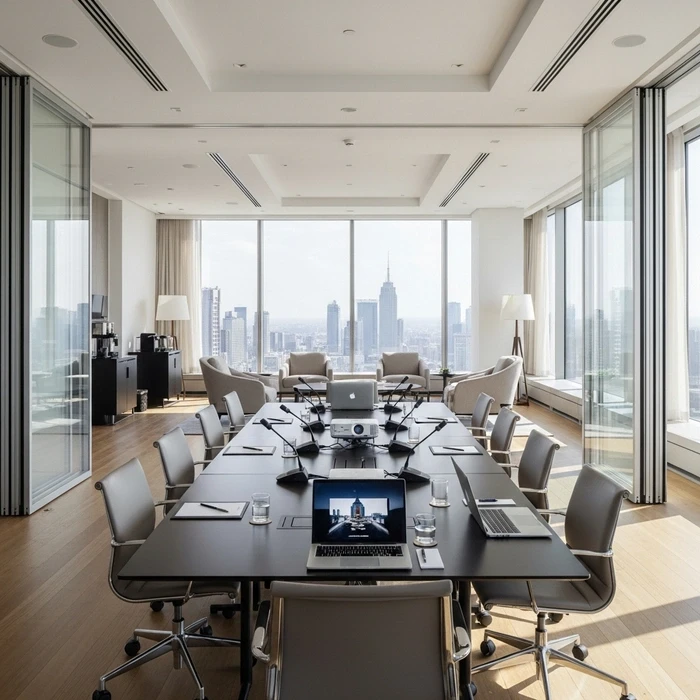
Your keynote speaker is live on stage at Madinat Jumeirah. Simultaneously, 400 remote attendees across Riyadh and Doha are watching a frozen screen. The stage manager has no line to the streaming engineer. The moderator is stalling. This is not a technology failure. It is a run of show failure.
A hybrid event run of show is the single most critical document in modern corporate event production. Yet most teams in the Middle East still rely on formats designed for fully in-person programs. The result: missed cues, dead air for virtual audiences, and a fractured brand experience.
This guide provides the exact production framework used across Fortune 500 events in the UAE, Saudi Arabia, and Qatar. It covers minute-by-minute scheduling, role assignments, cue sheets, rehearsal protocols, and the transition logic that separates polished hybrid execution from improvised chaos.
What Is a Hybrid Event Run of Show and Why Does It Differ from Standard Timelines?
A hybrid event run of show is a minute-by-minute production document that synchronizes in-person staging with virtual broadcast operations. It differs from standard timelines by requiring parallel cue tracks, dual-audience handoffs, and dedicated technical checkpoints for streaming and engagement tools.
The Core Structure of a Hybrid Show Flow
A traditional program rundown lists sessions, speakers, and times. A hybrid event show flow adds a second layer: the virtual production track. This track governs recording start/stop triggers, lower thirds displays, screen share checks, and platform-specific cues like poll timing and Q&A queue activation.
Every line item in the document must answer two questions. What is happening on stage? What is happening on screen?
Why Standard Templates Fail in the Gulf Region
Events at venues like the Atlantis The Royal in Dubai or the Ritz-Carlton Riyadh often run across multiple time zones. A product launch streaming to Doha, Abu Dhabi, and Jeddah simultaneously demands prayer break buffers, Arabic-English language switching cues, and region-specific compliance overlays. Standard Western hybrid templates do not account for these.
Harvard Business Review outlined what it takes to run a great hybrid meeting, but regional execution requires a far more granular approach. Gulf-based corporate events regularly involve government stakeholders, VIP protocols, and bilingual production that compound complexity.
The Information Architecture of the Document
Your run of show should contain these columns at minimum:
Time stamp (local time, with UTC reference)
On-stage action
Virtual broadcast action
Technical cue (AV, lighting, streaming)
Responsible person
Backup protocol
This dual-track architecture is non-negotiable for hybrid execution in 2026.
How Do You Build a Hybrid Event Production Schedule Minute by Minute?
Build the hybrid event production schedule by mapping every session into three phases: pre-session tech check, live execution window, and post-session transition. Assign specific timestamps to hybrid event technical cues, speaker handoffs, and virtual engagement triggers across both audience tracks.
Pre-Event Day Scheduling
The production day starts hours before doors open. At major UAE conference hotels like the Conrad Abu Dhabi Etihad Towers, AV load-in typically begins at 06:00 for a 09:00 start. Your hybrid event production schedule must include:
Audio checks for lapel, handheld, and virtual presenter microphones
Screen share checks for every remote speaker
Green room open time for in-person and virtual speakers
Backup slides loaded to secondary laptop
Building Timing Buffers That Protect Both Audiences
Timing buffers are essential. Allocate 3 to 5 minutes between every session. This covers speaker call times adjustments, mic swaps, and virtual platform resets. In Riyadh and Doha, factor additional 15-minute buffers around Dhuhr and Asr prayer times during Q4 conferences.
Flaash Expert Insight: For hybrid events at Saudi venues like the King Abdullah Financial District Conference Center, always schedule a 20-minute buffer before and after prayer breaks. Attempting to compress this window signals cultural insensitivity and disrupts production flow.
What Are the Essential Hybrid Event Roles and Responsibilities?
Hybrid events require at least six dedicated roles: show caller, stage manager, virtual moderator, stream engineer, audio technician, and speaker liaison. Each role manages a specific production track to prevent single points of failure across physical and digital audiences.
The Hybrid Event Stage Manager
The hybrid event stage manager owns the physical production. They manage speaker movement, prop placement, AV transitions, and on-stage timing. In a hybrid context, they must also relay cues to the streaming team through backstage comms channels, typically a dedicated talkback system or comms app.
The Hybrid Event Moderator Role
The hybrid event moderator role extends beyond introducing speakers. The moderator bridges the in-room and virtual audiences. They read remote questions aloud, acknowledge online participants by name, and manage the Q&A queue so virtual attendees feel equal priority. This role is critical to attendee engagement in corporate events.








The Show Caller and Stream Engineer
The show caller is the voice in everyone's ear. They call every cue: lighting changes, slide advances, recording start/stop, and session transitions. The stream engineer manages the broadcast output, switching cameras, triggering lower thirds, and monitoring stream health.
Role Assignment Matrix
Show Caller: Calls all cues, owns master timeline
Stage Manager: Manages physical stage and handoffs
Virtual Moderator: Manages chat, polls, Q&A
Stream Engineer: Manages broadcast, cameras, overlays
Audio Tech: Manages all audio checks and live mixing
Speaker Liaison: Manages green room and speaker call times
Understanding hybrid event roles and responsibilities at this level prevents the dangerous overlap that kills production quality.
How Should You Design Your Hybrid Event Cue Sheet for Technical Precision?
A hybrid event cue sheet converts the run of show into executable technical instructions for each production role. It specifies exact triggers, responsible operators, and fallback actions for every AV, streaming, and engagement cue during the event.
What Separates a Cue Sheet from a Run of Show
The run of show is the master timeline. The hybrid event cue sheet is the operator-specific extraction. Your lighting technician does not need to see poll timing. Your stream engineer does not need speaker bios. Each operator receives a filtered version with only their technical cues, triggers, and contingencies.
Structuring Technical Cues for Dual Audiences
Every technical cue should follow this format:
Cue number (sequential)
Trigger (what initiates the cue: time-based or action-based)
Action (specific technical task)
Operator (who executes)
Fallback (what happens if cue fails)
Example: Cue 14 / Trigger: MC says "Let's hear from our Doha office" / Action: Switch to remote presenter camera, load backup slides / Operator: Stream Engineer / Fallback: Hold on stage camera, speaker liaison confirms remote connection.
Managing Screen Share Checks and Backup Protocols
Screen share checks should happen twice. First during the morning tech rehearsal. Second, 15 minutes before the speaker's session. At properties like the W Dubai or the Four Seasons Riyadh, corporate AV teams often discover firewall restrictions that block screen sharing platforms. Test early. Test again.
For teams planning their first hybrid production, the AV readiness checklist for event venues in the UAE provides a foundational framework.
What Does an Effective Hybrid Event Rehearsal Plan Cover?
An effective hybrid event rehearsal plan includes a full technical dry run, speaker walk-throughs, cue-to-cue practice, and a simulated virtual audience test. Rehearsals must replicate actual broadcast conditions to expose failures before the live event.
The Three-Phase Rehearsal Protocol
Phase 1: Technical rehearsal. The AV and streaming team runs every cue without speakers. This tests lighting presets, camera angles, stream encoding, and backstage comms.
Phase 2: Speaker walk-through. Each presenter runs their segment. The show caller practices calling their cues. The virtual moderator tests poll timing and Q&A queue flow.
Phase 3: Full dress rehearsal. Simulate the event end to end with a test virtual audience. This is where you catch handoffs that feel clunky, session transitions that run long, and audio feedback loops.
Rehearsal Timing for Gulf-Based Events
For a half-day hybrid summit in Dubai or Riyadh, schedule the full hybrid event rehearsal plan the afternoon before. For multi-day conferences, allocate a dedicated rehearsal day. Venue turnaround times at locations like the Hilton Riyadh or the St. Regis Doha can limit your rehearsal window. Confirm load-in schedules with the property early.
Flaash Expert Insight: Always rehearse remote speaker segments from the actual locations where speakers will join. Hotel Wi-Fi, home office setups, and co-working spaces produce vastly different audio and video quality. A speaker who looks flawless on Zoom from their office may struggle on a corporate streaming platform from a hotel room in KAFD.
How Do You Manage Session Transitions and Handoffs Without Dead Air?
Manage session transitions by pre-programming holding content, assigning a dedicated transition caller, and using engagement triggers like polls or videos to bridge gaps. Dead air on the virtual feed is the fastest way to lose remote attendees.
The Transition Toolkit
Between every session, your virtual audience needs something on screen. Options include:
Branded countdown timers synced to the next session start
Pre-recorded sponsor segments or event highlights
Live poll results displayed as infographics
Background music with event branding overlay
Handoff Protocols Between Speakers
Physical handoffs require the stage manager to guide the outgoing speaker off while cueing the next. Virtual handoffs require the stream engineer to switch feeds while the speaker liaison confirms the next remote presenter is live in the green room. Both must happen simultaneously. The show caller coordinates.
Protecting the Virtual Experience During Physical Transitions
The remote audience cannot see a stage reset. They see a black screen or a frozen frame. Pre-load transition content into your streaming platform. Automate it where possible. The gap between sessions should feel intentional, not accidental.
For a deeper framework on hybrid corporate event planning including pre-production workflows, Flaash maintains a dedicated planning resource.
Flaash Expert Insight: In the UAE and KSA, event sponsors increasingly expect branded visibility during session transitions on the virtual feed. Build sponsor transition slides into your hybrid event cue sheet from day one. This avoids last-minute production scrambles and creates a monetization opportunity.
The difference between a hybrid event that builds your brand and one that damages it is not the technology. It is the document. A precise hybrid event run of show forces every stakeholder, from the show caller to the stage manager, into alignment before a single camera goes live.
Gulf-region corporate events are growing more complex. Bilingual production, multi-city streaming, VIP protocols, and government compliance layers demand a level of production rigor that no generic template can deliver.
Build the document. Rehearse the document. Then trust the document.
Flaash sources and manages venues across the UAE, Saudi Arabia, and Qatar for corporate teams that refuse to improvise. Start your venue search at Flaash.
FAQ: hybrid event run of show
What is a hybrid event run of show?
A hybrid event run of show is a detailed, minute-by-minute timeline that coordinates both in-person and virtual elements of an event, including speaker cues, technical transitions, and audience interactions to ensure a seamless experience for all attendees.
What should a hybrid event run of show include?
It should include session start/end times, speaker names, AV cues, live-stream transitions, Q&A segments, breaks, technical roles, and backup plans to synchronize on-site and remote production.
How do you create a run of show for a hybrid corporate event?
Map the attendee journeys for in-person and virtual audiences, merge them into one timeline, assign responsibilities for each cue, rehearse transitions with remote participants, and add buffer time for tech issues.
What is the difference between an agenda and a run of show?
An agenda is attendee-facing and lists sessions and topics; a run of show is an internal production document with precise timing and technical cues used by the production team.
How far in advance should you finalize a hybrid event run of show?
Finalize at least two weeks before the event to allow technical rehearsals, speaker briefings, and coordination between venue and virtual production teams.
Why is a run of show critical for hybrid events specifically?
Because hybrid events run two simultaneous audience experiences, a detailed run of show prevents miscommunication between on-site and remote teams, reduces dead air for virtual viewers, and ensures smoother transitions.


Recent Posts

Load More Blogs