
-
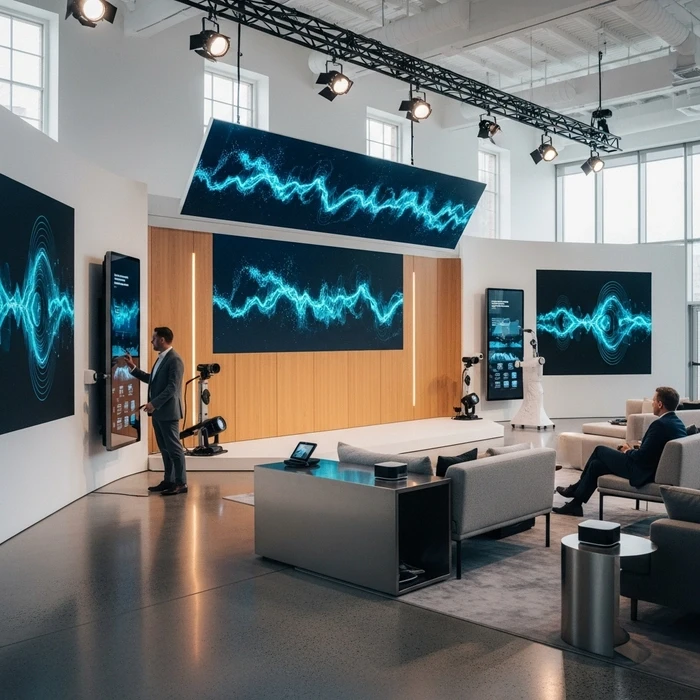
Every event tech deck seems to promise the same thing: smarter experiences, lower costs, better engagement, and less manual work. In theory, AI in hybrid events should make that possible. In practice, the picture in 2026 is more nuanced.
For corporate event planners and marketers across the UAE, Saudi Arabia, Qatar, and the wider Middle East, AI is no longer a future trend. It is already part of the workflow. But not every use case is equally valuable, and not every shiny feature deserves budget.
The most practical question is not whether to use AI. It is where AI event technology genuinely improves event ROI, and where it still creates more complexity than value.
Why AI in Hybrid Events Matters More in 2026
Hybrid events have matured. Audiences now expect a joined-up experience across physical and digital channels. They want relevant content, seamless registration, timely follow-up, stronger networking, and on-demand value after the event ends.
That is exactly why AI in hybrid events is getting so much attention. It can help event teams manage scale, personalize experiences, and turn one event into many pieces of reusable content.
For planners in the Gulf, this is especially relevant. Regional events often bring together multilingual audiences, cross-border stakeholders, and a mix of senior decision-makers attending both in person and virtually. That creates real demand for tools that support real-time translation, smarter engagement, and faster reporting.
Still, the smart approach in 2026 is not to buy into AI hype. It is to use AI where it is already reliable.
What Is Real: The AI Use Cases That Actually Work
Some AI applications are clearly useful now. They save time, reduce repetitive tasks, and improve attendee experience without introducing major risk.
1. Session summarization and content repurposing
This is one of the strongest real-world use cases today. Tools can turn recorded keynotes and panels into session summarization, key takeaways, social snippets, article drafts, and even short highlight reels.
For hybrid events, this matters because content value no longer ends when the session ends. A leadership summit in Dubai or a product launch in Riyadh can generate recap emails, LinkedIn posts, blog content, and internal reports within hours.
This is where AI content repurposing events delivers real operational value. It helps lean teams extend the life of event content without asking marketers to manually review hours of video.
That said, human review is still essential. AI can summarize, but it can also miss nuance, overstate a point, or attribute comments incorrectly. For executive communications, compliance-heavy sectors, or high-profile brand events, a human-in-the-loop process is not optional.










2. AI translation for events
AI translation for events is far more practical in 2026 than it was just a few years ago. For many hybrid formats, speech-to-text and real-time translation now offer solid support for multilingual audiences.
This is particularly useful in the Middle East, where attendees may prefer Arabic or English, while some audiences also need support in French, Hindi, or Urdu depending on the sector and location.
AI translation works best when:
speakers use clear audio
sessions follow a structured format
terminology is prepared in advance
there is a review layer for critical content
It works less well in fast panel discussions, overlapping conversations, or highly technical sessions with niche vocabulary.
So yes, it is real. But it is not magic. It improves accessibility and reach, especially when paired with strong AV and captioning standards. Event teams should also follow good accessibility practices for media, such as those outlined by the W3C: https://www.w3.org/WAI/media/av/
3. Automated email journeys and chatbots for attendees
This is another area where AI event automation is already useful. Attendees expect fast answers, relevant reminders, and personalized communication. AI can support automated email journeys based on behavior, registration type, interests, or attendance patterns.
For example, a delegate who signs up for a hybrid conference in Abu Dhabi but has not selected sessions can receive tailored prompts, smart agendas, or personalized recommendations. A returning attendee can receive different messaging than a first-time registrant. A virtual attendee can be nudged toward replay content and networking sessions.
Likewise, chatbots for attendees can answer standard questions about venue access, session timing, parking, livestream links, and FAQs. This reduces pressure on event teams and improves responsiveness.
These tools are especially valuable when the basics are already strong. AI will not fix unclear event information. But when your logistics and comms strategy are well structured, automation can make them far more efficient.
4. AI analytics for events
AI analytics for events is one of the most credible categories in 2026 because it directly supports decision-making. Event teams can now analyze attendance behavior, content consumption, dwell time, drop-off points, audience interaction, and post-event engagement more quickly than before.
For hybrid formats, this matters because success is harder to measure without a unified view of physical and digital performance. AI helps surface patterns that would otherwise be buried in multiple dashboards.
For teams focused on performance, this connects naturally with metrics frameworks such as hybrid event ROI and hybrid event KPIs.
The real value here is not just more data. It is better interpretation. AI can highlight which sessions drove engagement, which audience segments converted, and which touchpoints led to meaningful outcomes. But again, the model is only as good as the inputs. If your tracking setup is weak, AI will only process weak data faster.
5. AI matchmaking for events
AI matchmaking for events is useful when the event format genuinely depends on connections. For B2B conferences, investor forums, hosted buyer programs, and curated networking events, AI can help match attendees based on goals, profile data, interests, and behavior.
When done well, this is one of the clearest ways to improve attendee value in a hybrid setting. It can help surface relevant people, not just relevant content.
But it only works if registration data is detailed enough. If your form only captures name, title, and company, the system has very little to work with. Good matchmaking needs structured inputs and realistic expectations.
For event planners building networking-heavy formats, venue also matters. The event space must support the intended flow, from lounge layouts to breakout areas and meeting pods. That is where venue strategy and event technology need to work together, not separately.
What Is Overhyped: The AI Claims to Treat Carefully
Not every AI promise has matured at the same pace. Some features still sound more impressive in demos than they feel in actual event operations.
1. Fully autonomous event management
The idea that AI can run major parts of an event end to end is still overhyped. It can assist, suggest, summarize, and automate repetitive steps. It cannot replace experienced planners making real-time decisions under pressure.
Hybrid events involve suppliers, speakers, timelines, venue teams, AV coordination, executive preferences, audience expectations, and brand risk. That environment still requires human judgment.
In 2026, the most effective use of AI tools for event managers is support, not substitution.
2. Real-time sentiment analysis as a decision engine
Sentiment analysis can be interesting, especially in digital channels where chat, polls, and reactions generate fast feedback. But the idea that you should dynamically reshape an event around live sentiment signals is often overstated.
A dip in reaction volume does not always mean a session is failing. A quiet audience can still be highly engaged. A noisy chat can reflect confusion rather than enthusiasm. Real-time signals are useful inputs, but not reliable enough to drive major programming decisions on their own.
3. Generative AI without governance
Generative AI for events is useful for drafts, ideas, and acceleration. It is not reliable enough to publish unsupervised. It can invent details, flatten tone, misuse names, or create content that sounds polished but is wrong.
For Middle East corporate events, this matters even more. Regional context, language sensitivity, brand standards, and sector regulations make accuracy essential. AI can help produce a first version of a session page, speaker intro, or email flow. But final approval must stay with the event team.
4. Predictive models that promise too much certainty
Some vendors still overpromise on forecasting attendance, engagement, or lead quality. Predictive models can be useful, but they are rarely as precise as the pitch suggests, especially for niche B2B events, first-time formats, or executive-level gatherings.
In many cases, strong planning assumptions and historical benchmarks remain more trustworthy than a black-box prediction engine.
The Caveats That Matter Most: Privacy, Governance, and Human Review
The biggest mistake event teams can make is treating AI as a productivity layer without considering risk. In reality, the governance side of AI is now just as important as the creative side.
Privacy and consent
Hybrid events generate large amounts of attendee data. Once you add AI, that can include transcripts, behavior patterns, messaging interactions, recommendation logic, and profile-based segmentation.
That means privacy and consent cannot be an afterthought. Attendees should understand what data is being collected, how it is used, and where it is processed. If vendors use third-party models or cross-border infrastructure, planners need visibility into that setup.
This is not only a legal issue. It is also a trust issue.
Data governance
Data governance matters because AI systems depend on data quality, access controls, retention rules, and accountability. Event teams should know:
what data is being captured
who can access it
how long it is retained
how it is deleted
whether it is used to train external models
For organizations with European exposure or global governance standards, the broader AI regulatory landscape also matters. The EU AI Act is one reference point many teams are now monitoring: https://artificialintelligenceact.eu/
Model accuracy
Model accuracy is often discussed too casually. An AI tool may perform well in general but struggle with your speakers, your industry terms, your audience mix, or your language needs.
This is why testing matters. Before deploying an AI workflow across a live event, teams should validate performance on real content, not only vendor demos.
Human-in-the-loop review
A human-in-the-loop model is one of the most practical safeguards in event operations. It means AI can create drafts, suggestions, tags, summaries, or flags, but a person reviews the output before it affects attendees, speakers, or brand assets.
This is especially important for:
external communications
multilingual content
speaker bios and credentials
meeting recommendations
fraud detection flags
compliance-sensitive copy
Prompting workflows
Good results depend on good instructions. In 2026, many event teams are learning that AI performance improves significantly when they build repeatable prompting workflows instead of relying on ad hoc requests.
That means creating tested prompt templates for common tasks like agenda summaries, post-event reports, social copy, attendee emails, and session recaps. It also means documenting what works and training teams to use AI consistently.
A Practical 2026 View: Where to Invest First
If you are planning hybrid events this year, the strongest starting points are clear.
Invest first in:
content summarization
AI translation support
attendee communication automation
post-event analytics
selective matchmaking use cases
Treat with caution:
autonomous event orchestration
overengineered sentiment-led decision tools
unsupervised generative publishing
aggressive prediction claims without evidence
If you are reviewing your wider setup, these guides can help frame the conversation around infrastructure and outcomes:
Final Take: AI Is Useful, But It Is Not the Strategy
The truth about AI in hybrid events in 2026 is simple: the real value is operational, not theatrical.
AI is genuinely useful when it removes repetitive work, improves accessibility, supports personalization, and helps teams extract better insight from event data. It is overhyped when it claims to replace strategic thinking, creative judgment, or experienced event management.
For corporate planners in the UAE, Saudi Arabia, and Qatar, the winning model is not AI-first at all costs. It is event-first, with AI supporting the parts of the workflow where it is already proven.
And none of that works in isolation from the venue. The right hybrid event still depends on a space that supports production, audience flow, networking, streaming, and business objectives.
If you are planning a corporate event in the Middle East and want a venue that fits both your format and your tech requirements, Flaash can help. Flaash sources tailored venue proposals across the UAE, Saudi Arabia, and Qatar, free for users, so your team can spend less time searching and more time building an event that performs.
FAQ: AI in hybrid events
What is AI in hybrid events and why should corporate event planners in the UAE, Saudi Arabia, Qatar and the Middle East use it?
AI in hybrid events applies machine learning and automation to personalize agendas, match attendees, automate support, and analyze engagement. For regional corporate planners it boosts attendee satisfaction, scales bilingual experiences (Arabic/English), and improves measurable outcomes with less manual effort.
How can AI increase attendee engagement at hybrid corporate events?
Use AI-driven matchmaking, personalized content feeds, live sentiment polling and real-time translation to keep both virtual and in-room audiences active. Practical tip: enable smart networking and short, AI-curated session highlights to drive follow-up meetings.
Which AI features should I prioritize when selecting platforms for hybrid events in the Gulf?
Prioritize Arabic/English language support, real-time interpretation, matchmaking, automated moderation/chatbots, and analytics dashboards. Evaluate vendors for local language accuracy, mobile UX, and whether they offer local data hosting or compliance assurances.
How does AI help with logistics and venue readiness for hybrid events in the region?
AI predicts attendance, optimizes room layouts, flags AV/connectivity gaps and schedules automated load and stream tests. Practical step: run vendor-provided AI connectivity and device checks 48–72 hours before the event.
What data-privacy and compliance actions are essential when using AI in hybrid events across the Middle East?
Verify local data-protection rules (e.g., UAE and Saudi PDPLs, Qatar privacy requirements), collect explicit consent, minimize personal data, anonymize analytics, and sign data-processing agreements with vendors that offer regional data residency when required.
How can AI reduce costs and prove ROI for corporate hybrid events?
Automate registration, attendee support, and reporting to cut staff hours; use predictive attendance and targeted outreach to reduce wasted spend. Track cost-per-engaged-attendee, conversion to business outcomes, and post-event NPS to quantify AI-driven savings and impact.



Recent Posts
Load More Blogs