
-
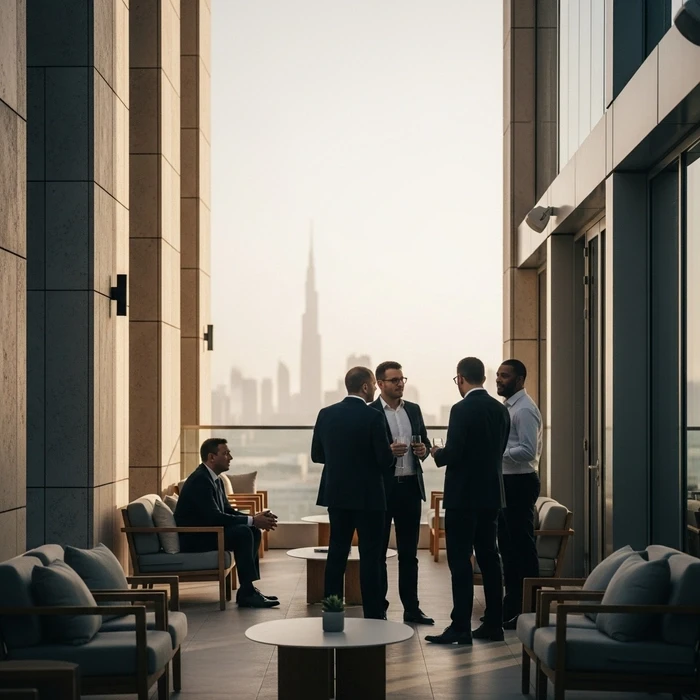
Running a single corporate event in Dubai is complex enough. Now multiply that by three cities, two countries, and a dozen stakeholders with competing priorities. That is the reality of multi-city corporate events GCC programs in 2026.
The GCC corporate events market has matured rapidly. Organizations now routinely deploy product launches, leadership roadshows, executive summits, internal engagement tours, and investor programs across Dubai, Abu Dhabi, Riyadh, Jeddah, Doha, and Dammam. But the operational gap between planning one event and orchestrating a coordinated regional program is significant.
Many teams underestimate that gap. They treat a multi-city event as several separate events with shared branding. In practice, that approach often creates duplicated work, inconsistent attendee experience, budget pressure, and internal friction. A stronger approach is to treat the entire initiative as one strategic program with local execution layers.
This article breaks down the core planning model for multi-city corporate events GCC teams need today: governance, city selection, sequencing, budgeting, venue sourcing, localization, logistics, risk management, stakeholder alignment, measurement, and the mistakes to avoid. If you are building a regional roadshow or any form of cross-border corporate events initiative, this is the framework that helps you stay organized while protecting ROI.
Why multi-city corporate events are growing across the GCC
The rise of regional event planning GCC programs is not accidental. It reflects how companies now operate in the region. Many businesses have regional headquarters in the UAE, major commercial growth in Saudi Arabia, and strategic partnerships or government-facing activity in Qatar. Reaching those audiences through a single event in one city is often not enough.
A well-designed multi-city format helps companies:
Reach different stakeholder groups in their primary market
Maintain message consistency across multiple countries
Build momentum over a compressed time period
Activate local sales, HR, leadership, or communications goals
Generate stronger overall return than isolated one-off events
This is particularly relevant for product launches, employer branding tours, leadership town halls, client engagement roadshows, training series, partner summits, and internal transformation programs.
If you are evaluating whether a regional format is worth the added complexity, this guide on multi-city event ROI comparison offers a useful perspective.









What strategic planning really means for a multi-city GCC event
In this context, strategic planning is not simply choosing dates and venues. It means designing the full operating model of the program before execution begins.
That includes:
A clear decision framework
Defined ownership through a central PMO
A practical RACI
Smart city sequencing
Unified creative direction with selective localization
Disciplined resource allocation
Standardized approval workflow
Supplier expectations backed by SLA
A live risk register
Realistic contingency planning
Without these elements, the event team tends to spend the whole program reacting rather than leading.
Governance first: the foundation of multi-city event success
Why governance matters more than most teams expect
The biggest difference between a smooth regional roadshow and a stressful one is usually not the venue or budget. It is governance. A strong multi-city event governance model reduces confusion, shortens approval cycles, and protects quality across all cities.
When governance is weak, common problems appear quickly:
Different stakeholders approve different versions of messaging
Local teams make venue or vendor decisions that conflict with central strategy
Budget ownership becomes unclear
Timelines slip because nobody owns escalation
The attendee experience becomes inconsistent across cities
Build a central PMO
A central PMO should oversee the program. That does not mean every decision must be made by head office, but it does mean one core team owns the whole structure.
The PMO should typically control:
Master timeline
Budget governance
Brand standards
Supplier strategy
Executive reporting
Escalation management
Measurement framework
Local city leads can then manage on-the-ground execution within those rules.
Use a RACI for every key workstream
A documented RACI is essential for GCC event stakeholder management. Every workstream should clearly show who is:
Responsible
Accountable
Consulted
Informed
Apply this to:
Venue sourcing
Production
Catering
Guest management
Speaker coordination
Travel and logistics
Marketing and communications
Compliance and approvals
Reporting
This one step prevents many of the most common regional planning issues.
Create a structured approval workflow
Multi-city programs often stall because approvals are handled informally. A proper approval workflow should define:
Who approves budgets
Who signs contracts
Who approves creative
Who confirms guest lists
Who can trigger contingency decisions
What turnaround time is expected at each stage
This is especially important when teams are spread across the UAE, Saudi Arabia, and Qatar, each with different internal leadership structures.
Choosing the right cities: strategy before habit
Do not default to the same city list every time
A common mistake in GCC corporate event strategy is selecting cities based on familiarity rather than business need. Just because Dubai, Riyadh, and Doha are popular does not automatically mean they are the right combination.
City selection should reflect:
Audience concentration
Commercial priorities
Executive availability
Partner ecosystem
Travel efficiency
Venue supply
Budget realities
Program objectives
When Dubai makes sense
Dubai remains a strong anchor city because of its connectivity, mature venue inventory, and ease of access for regional and international attendees. It works particularly well for:
Regional kickoffs
Product launches
Client and partner events
Media-facing programs
Programs requiring broad accessibility
Its challenge is competition. Premium dates and venues can move quickly, especially in peak season.
When Abu Dhabi should be part of the plan
Abu Dhabi is sometimes overlooked in favor of Dubai, but it is often the better fit for executive audiences, energy sector events, government-linked meetings, and more focused leadership programs. It can also offer a more controlled and premium environment depending on the event format.
When Riyadh leads the program
For many businesses in 2026, Riyadh is no longer a secondary city. It is the commercial center of gravity for some of the region's most important growth strategies. It is often the best lead city for:
High-level stakeholder engagement
Strategic announcements
Government-adjacent meetings
Saudi-first market initiatives
Talent and employer branding programs
When Jeddah or Dammam are better than Riyadh
Not every Saudi event belongs in Riyadh.
Jeddah can be the right choice for western region audiences, hospitality and tourism sectors, family business networks, and Red Sea corridor stakeholders.
Dammam is highly relevant for energy, logistics, industrial, and eastern province audiences. For companies targeting those sectors, choosing Dammam instead of Riyadh often improves attendance quality and lowers friction.
When Doha adds strategic value
Doha works well when the audience includes senior business leaders, institutional partners, government stakeholders, and highly targeted corporate groups. Venue quality is strong, and the city works especially well for premium formats.
City sequencing: getting the order right
Sequencing is a strategic choice
City sequencing affects momentum, budget, team energy, and the quality of each stop. The order should be driven by business priorities and operational logic, not internal politics.
Good sequencing considers:
Which city matters most strategically
Where key speakers are based
Which stop will generate the strongest launch effect
How easy it is to move people and materials between locations
Seasonal constraints and local calendars
Common sequencing models
A few practical models often work well:
Model 1: Dubai -> Riyadh -> Doha
This is a strong format for broad regional programs. Dubai acts as the accessible launch city, Riyadh captures Saudi market impact, and Doha closes with a focused, premium stop.
Model 2: Riyadh -> Jeddah -> Dubai
Useful for Saudi-led initiatives that want to build domestic market relevance first, then close in the UAE for regional visibility.
Model 3: Abu Dhabi -> Dammam -> Doha
This can fit highly specialized executive, industrial, or institutional programs where audience quality matters more than scale.
Program cadence matters
Program cadence should be tight enough to preserve momentum but realistic enough to protect execution quality. For many corporate roadshow planning GCC programs, a 7-to-14-day window across three cities is effective.
Too short, and the team cannot reset properly between stops. Too long, and the narrative loses energy.
Your itinerary architecture should include:
Setup and breakdown windows
Team recovery time
Freight movement buffers
Speaker travel limitations
Local business week rhythms
Prayer and cultural schedule considerations where relevant
Budgeting a multi-city event program without losing control
Build a hybrid budget structure
One of the best models for multi-city event program design is a hybrid budget:
Centralized budget for strategy, creative, technology, production standards, and reporting
City-level flex budgets for venue, catering, staffing, and local activation needs
This protects consistency while still allowing local adaptation.
Know where standardization helps
Budget efficiency improves when some categories are centrally standardized:
Visual identity
Presentation templates
Registration platform
Stage design principles
Event app or attendee communications
Core production specifications
This avoids recreating the same deliverables city by city.
Know where localization is necessary
At the same time, some cost lines need local flexibility:
Venue rental
F&B structure
Transport
Staffing rates
Permits
Security
Local entertainment or protocol elements
Trying to force the same cost assumptions across Dubai, Riyadh, and Doha usually creates unrealistic planning.
For planning support, both GCC corporate event budget trends 2026 and corporate event cost benchmarks GCC can help benchmark current market expectations.
Hidden budget lines teams often miss
Common missed costs include:
Cross-border freight
Storage between cities
Crew accommodation on transit days
Visa or travel processing
Last-mile branding changes
Duplicate technical rehearsals
Currency and payment timing issues
Backup equipment in case of transit delay
These are often the costs that make a program appear on budget in planning and over budget in delivery.
Use SLAs with regional suppliers
Where possible, negotiate multi-city supplier agreements and define service expectations in writing. A clear SLA should outline:
Delivery timelines
Staffing commitments
Replacement policies
Technical specs
Response times for urgent issues
Escalation process
This is especially valuable for AV, registration, transport, and branded production vendors.
Venue sourcing across the GCC: what changes by city
Venue strategy is not just about finding space
In multi-destination event planning, venue sourcing has to support both the business objective and the operating model. The venue is part of the attendee experience, but it also affects logistics, setup time, cost structure, site readiness, and risk.
A good venue for a multi-city program should be assessed against:
Audience accessibility
Technical capability
Setup flexibility
Brand fit
Catering quality
Parking and transport
Back-of-house flow
Hotel room inventory if needed
Contract terms
Ability to support local nuances without compromising central standards
Dubai realities
Dubai offers broad inventory and strong service standards, but demand can be intense. Hotels and conference venues in business districts are often ideal, but premium dates can book far ahead. Traffic patterns also matter. A venue that looks central on paper may still create friction for guests depending on the time and district.
Abu Dhabi realities
Abu Dhabi often delivers a calmer, more executive-friendly atmosphere. It can be a strong choice for board-level sessions, government-linked audiences, and longer-format programs where convenience and control matter more than nightlife or media buzz.
Riyadh realities
Riyadh's event ecosystem continues to evolve quickly. There are more high-quality options than before, but lead times, local demand, and operational detail matter. Teams should pay particular attention to access, traffic, setup windows, and venue management responsiveness.
Jeddah realities
Jeddah can be a strong hospitality-driven city with attractive waterfront and premium hotel options. It works well for relationship-focused formats, but planners should still validate technical readiness and service levels carefully.
Doha realities
Doha's venue ecosystem is polished and premium. For many corporate formats, quality is high, but options can be more concentrated than in Dubai. Early sourcing still matters, particularly around major city events and peak business periods.
Dammam realities
Dammam is highly practical for industry-focused corporate events. The venue pool may be narrower than in larger capitals, so early sourcing and a realistic brief are important.
How Flaash fits naturally into the process
For teams planning across multiple GCC markets, venue sourcing can become one of the most time-consuming parts of the process. This is where Flaash can be useful. Rather than contacting venues city by city, companies can submit one brief and receive tailored proposals for corporate events across the Middle East, with project manager support and detailed options. That is especially helpful when comparing venues across cities under one strategic framework.
Balancing standardization and localization
Standardize what the audience should recognize
Strong regional programs use standardization to create familiarity. Attendees in Riyadh and Doha should feel they are part of the same initiative.
Standardize:
Core visual identity
Master agenda logic
Stage layout principles
Registration flow
Content hierarchy
Host briefing standards
Measurement model
Localize what improves relevance
Use localization where it improves comfort, participation, and business value:
Language use and translation
Audience examples and case studies
Catering style
Session timing
Cultural references
Protocol handling
Guest communication tone
This balance is essential for cross-border corporate events. Too much standardization makes the event feel imported. Too much localization weakens the program identity.
Logistics and operational planning across borders
Treat logistics as a strategy workstream
In GCC regional programs, logistics is not just execution support. It is a strategic risk area. If equipment, speakers, or branded assets do not move smoothly, the whole program suffers.
Your logistics workstream should cover:
Freight planning
Crew travel
Hotel blocks
Airport transfers
Customs documentation
On-site staffing rotation
Technical rehearsal windows
Inventory tracking
Site readiness should be checked consistently
A structured site readiness checklist should be used in every city. That checklist should assess:
Load-in access
Ballroom dimensions and rigging limits
AV readiness
Power and internet
Registration area flow
Green room and VIP holding space
Catering service plan
Safety and emergency access
Branding installation points
Using one checklist across all cities helps compare venues properly and reduce surprises.
Resource allocation between central and local teams
Resource allocation is often where planners either overspend or overstretch internal teams. A useful model is:
Central team handles program leadership, creative, reporting, supplier standards
Local teams handle venue coordination, local guest support, city-specific needs
Specialist vendors support technical delivery where required
This helps protect both consistency and realism.
Stakeholder alignment: keeping internal teams moving together
Why internal alignment often becomes the biggest challenge
In many regional programs, internal stakeholder alignment is harder than external execution. Sales, HR, communications, leadership, procurement, and country management may all want different things from the same event.
That is why GCC event stakeholder management needs a formal process, not occasional check-ins.
Create one shared decision framework
A good decision framework defines:
The objective of the overall program
The role of each city
Who has final say on key trade-offs
What success looks like by audience type
Which items are fixed and which are flexible
Without this, every city tends to re-debate the basics.
Build regular regional check-ins
A practical rhythm might include:
Weekly core PMO call
Biweekly executive update
City-specific execution reviews as event dates approach
One final integrated readiness review before launch
This protects pace without creating unnecessary meetings.
Risk management and contingency planning
Every program needs a live risk register
A multi-city program should have a working risk register, not a one-time document. It should include:
Risk description
Affected city or cities
Probability
Impact
Owner
Mitigation plan
Trigger for escalation
Backup action
Typical GCC regional risks
Relevant risks may include:
Venue unavailability or date movement
Freight delay across borders
Speaker cancellation
Shortened setup window
Local permitting issue
Weather disruption for outdoor functions
Major city event affecting traffic and hotel demand
Internal approval delays
Last-minute audience changes
Contingency planning should be practical
Good contingency planning focuses on the risks most likely to disrupt outcomes.
Examples:
Keep backup venue options identified in each city
Have alternative run-of-show versions for shorter setup
Prepare substitute speakers or moderated formats
Duplicate critical presentation files and event assets
Build extra time into inter-city transport plans
Keep local print and production options on standby
The strongest event teams do not eliminate risk. They make risk manageable.
Measuring success across all cities
Use city-level and program-level metrics
Regional event reporting should operate at two levels.
City-level metrics
Attendance quality
Show-up rate
Session engagement
NPS or satisfaction
Stakeholder feedback
On-time delivery
Budget adherence
Program-level metrics
Total qualified audience reached
Executive meetings generated
Pipeline or opportunity influence
Employee engagement impact
Message consistency across markets
Cost per business outcome
Brand lift across the region
Design measurement early
Measurement should shape planning, not just reporting. Decide early:
What attendee data you need
What counts as a qualified participant
Which interactions matter most
How follow-up will be tracked
Which metrics leadership actually values
Sustainability should also be part of success
Many companies now include environmental responsibility in their event evaluation. This is increasingly relevant in the region, and approaches such as reducing redundant freight, choosing efficient venues, and minimizing waste are becoming more common. This guide to sustainable corporate events GCC 2026 is useful for planners integrating sustainability into regional programs.
Common mistakes in multi-city GCC event planning
Mistake 1: Treating each city like a standalone event
This creates inconsistency, duplicated work, and weak ROI. A regional program should feel unified.
Mistake 2: Choosing cities based on internal preference
A city should earn its place through audience logic and business value.
Mistake 3: Underestimating governance
Without governance, teams lose time, money, and quality.
Mistake 4: Over-standardizing
Not everything should be identical. Local relevance matters.
Mistake 5: Under-planning logistics
Border movement, buffers, crew schedules, and technical setup need more attention than many teams expect.
Mistake 6: Measuring attendance instead of impact
A smaller audience in the right city can outperform a larger one in the wrong city.
Mistake 7: Starting venue sourcing too late
Venue sourcing is often a critical path item. Delays here affect every other workstream.
A practical planning checklist for multi-city corporate events GCC
Use this as a simplified planning guide:
Strategy
Define program objective
Confirm audience by city
Establish success metrics
Build decision framework
Governance
Set up central PMO
Create RACI
Define approval workflow
Schedule reporting cadence
Program design
Choose cities
Build city sequencing
Define program cadence
Standardize core experience
Budget
Split central and local budgets
Add contingency reserve
Benchmark by market
Align supplier SLAs
Venue sourcing
Build city-specific briefs
Check accessibility and technical fit
Validate site readiness
Keep backup options
Localization
Review language needs
Adapt examples and content
Align timing with local expectations
Confirm protocol needs
Logistics
Map freight and travel
Build setup buffers
Confirm staffing model
Track inventory centrally
Risk
Create live risk register
Assign owners
Prepare contingency planning actions
Review before each city
Measurement
Define city and program KPIs
Capture live data
Plan follow-up reporting
Run final retrospective
Final thoughts
The opportunity in multi-city corporate events GCC is clear. Companies can reach key audiences across the region, reinforce their message in market-specific ways, and create stronger business outcomes than with isolated events. But the value comes from disciplined structure, not just ambition.
The most effective programs combine:
Strong governance
Smart city selection
Practical city sequencing
Clear budgeting logic
Early venue sourcing
Balanced standardization and localization
Active risk management
Thoughtful measurement
As GCC markets continue to evolve, regional event strategy is becoming more sophisticated. If you want a broader view of where the market is heading, GCC corporate event planning trends 2026 is a useful companion read.
For corporate event planners, office managers, HR leaders, communications teams, and project managers working across the UAE, Saudi Arabia, and Qatar, the core message is simple: regional programs work best when they are planned as one system, not many separate events.
And when venue sourcing becomes the bottleneck, Flaash can help simplify that part of the process by matching companies with tailored corporate venue options across the Middle East, with project manager support and no cost to the user.
FAQ: multi-city corporate events GCC
What are multi-city corporate events in the GCC?
Multi-city corporate events in the GCC are coordinated business gatherings held across several Gulf cities, such as Dubai, Riyadh, Abu Dhabi, and Doha, under a single program. They can include product roadshows, regional conferences, executive workshops, or internal engagement tours designed to reach multiple markets efficiently.
Why should my company run multi-city corporate events in the UAE, Saudi Arabia and Qatar?
Running multi-city corporate events across the UAE, Saudi Arabia, and Qatar increases regional reach, builds local relationships in each market, and strengthens brand recognition across the GCC. It also allows companies to adapt messages for local audiences while keeping one consistent regional campaign.
Which GCC cities are best suited for multi-city corporate events?
Top choices often include Dubai and Abu Dhabi in the UAE, Riyadh and Jeddah in Saudi Arabia, and Doha in Qatar. These cities offer strong connectivity, professional venues, reliable technical infrastructure, and solid conditions for corporate event delivery.
How do I plan logistics for a multi-city corporate event across the GCC?
Start with one regional timeline, shared brand assets, and a central planning structure. Then localize venue bookings, permits, catering, and speaker arrangements in each city. It also helps to coordinate travel centrally and assign an on-the-ground lead in every market.
What budget factors should I expect for multi-city corporate events in the GCC?
Key cost drivers include venue rental, AV and production, travel and accommodation, local staffing, permits, and communications. Costs vary by city, season, and event scale, so a hybrid budget model with central control and city-level flexibility usually works best.
How can I ensure compliance and cultural fit for events across the GCC?
Work with local partners or venue teams to validate permits, business customs, guest communications, and scheduling expectations in each market. Adapting language, timing, and protocol details helps reduce risk and creates a better attendee experience across the GCC.
Recent Posts

Load More Blogs