
-
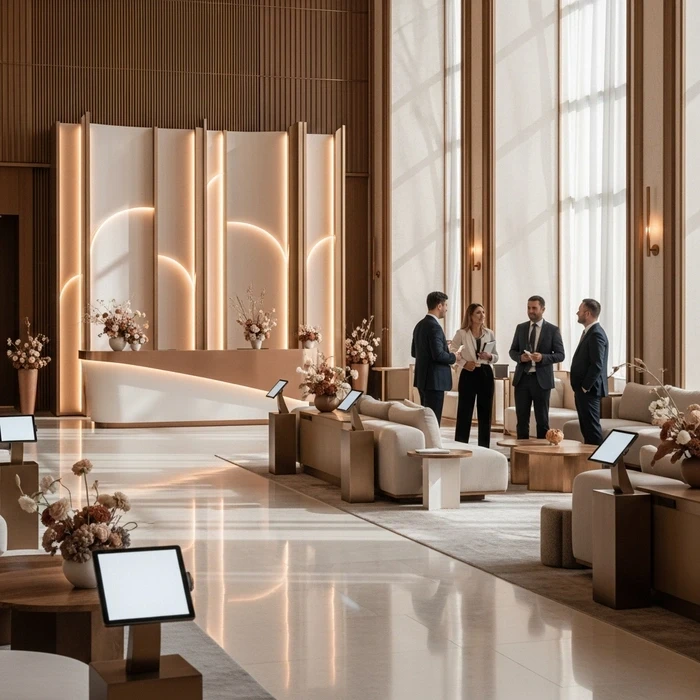
The brief landed on your desk three weeks ago. The CFO wants measurable ROI. The sustainability team flagged new compliance rules. HR insists on inclusivity. And you still need a venue in Riyadh that can host executives in Q4, when every major property is already on hold for Vision 2030 activations.
Welcome to corporate event planning in 2026.
The GCC events landscape has shifted fundamentally this year. Budgets face sharper scrutiny. Yet expectations for attendee experience have never been higher. Regional governments are accelerating investment in the MICE sector, creating both opportunity and intense venue competition across Dubai, Riyadh, Doha, and Abu Dhabi. Meanwhile, new regulations around data privacy, sustainability reporting, and event accessibility have turned what used to be "nice-to-haves" into hard procurement requirements.
Whether you are tracking UAE corporate event trends 2026 or navigating the fast-evolving Saudi corporate event trends 2026, the fundamentals are converging around the same themes. This guide breaks down the most consequential GCC corporate event planning trends 2026 for event project managers, communications leads, HR managers, and office managers tasked with delivering high-impact corporate gatherings. No theory. No filler. Just the strategic shifts you need to act on right now.
What Are the Defining Corporate Event Trends in the GCC for 2026?
The GCC corporate events landscape in 2026 is defined by three forces: government-backed mega-event infrastructure, tightening ESG mandates from global headquarters, and a decisive shift toward measurable event outcomes over vanity metrics. These forces are reshaping every planning decision from venue selection to post-event reporting.
Mega-Event Infrastructure Is Raising the Bar
Saudi Arabia's Expo 2030 preparations and Qatar's post-FIFA legacy investments have flooded the market with world-class venues. Riyadh alone has added significant convention-grade inventory around King Abdullah Financial District (KAFD) and Riyadh Front. In Doha, the Lusail district venues built for the 2022 World Cup are now fully operational for corporate events GCC 2026. They offer state-of-the-art AV systems and modular layouts ideal for product launches and executive summits.
The upside is clear: more choice, better technology, higher standards. The challenge is equally clear: premium dates are booked faster than ever. PwC Strategy& research on mega-events confirms that infrastructure investment in the Gulf is outpacing every other region globally. For event managers, this means longer lead times and more strategic scheduling around national calendars and major government milestones.
Corporate Mandates Are Rewriting the Planning Playbook
Global organizations with GCC operations now require their regional teams to meet headquarters-level standards on sustainability, diversity, and digital security. This is not optional guidance. It is embedded in procurement workflows. If your venue or vendor cannot demonstrate compliance, you will not get sign-off from corporate.
This mandate-driven reality is most visible in financial services, energy, and technology sectors. Companies headquartered in Europe or North America are applying the same compliance frameworks in Dubai and Riyadh that they enforce in London and New York.
From Attendance Numbers to Business Impact
The most significant mindset shift in corporate event planning 2026 is the move from measuring attendance to measuring outcomes. Event measurement now means tracking lead quality, deal velocity post-event, employee sentiment scores, and stakeholder communications effectiveness. The events that secure repeat budget are the ones that prove business value with hard data.
Flaash Expert Insight: In Riyadh and Jeddah, Q4 2026 venue availability is already constrained due to Saudi National Day activations and Vision 2030 milestone events. If you are planning a corporate event in Saudi Arabia for October through December, begin your venue search no later than April.
How Is Sustainability Reshaping Corporate Events Across the Gulf?
Sustainability has moved from a branding exercise to a hard procurement requirement for corporate events in the GCC. In 2026, ESG requirements influence venue selection, catering sourcing, logistics, and post-event waste reporting, directly impacting whether events pass internal compliance reviews.
ESG Requirements Are Now Procurement Gatekeepers
Multinational corporations operating in the UAE and Saudi Arabia increasingly mandate that their events meet specific environmental criteria. This includes carbon footprint calculations, single-use plastic restrictions, and verified waste diversion rates. Properties like Atlantis The Royal in Dubai and The Ritz-Carlton, Riyadh have responded by publishing event-specific sustainability data sheets. Procurement teams can now attach these directly to internal approval workflows.
The same expectation is emerging in Qatar. Doha's premium hotels are beginning to offer carbon offset packages bundled with corporate event bookings. This is a direct response to demand from international clients.
Sustainability Reporting in Event RFPs
If you manage events for a publicly listed company, you have likely seen this shift firsthand. RFP templates now include dedicated sections on environmental impact. Venues that cannot provide verified metrics on energy consumption, water usage, and waste management per event are being excluded from shortlists entirely.
This trend is particularly pronounced among European-headquartered firms with GCC operations. But it is rapidly becoming standard across the region as local regulations align with international frameworks.
What This Means for Venue Selection
For event managers, the practical impact is clear. You need venue partners who can document their sustainability credentials before contracting. This adds a layer of complexity to sourcing, especially across multiple GCC cities where standards vary.
Dubai's venues are generally ahead in certification and reporting. Saudi venues are catching up quickly, driven by Vision 2030 sustainability targets. Qatar sits somewhere in between, with strong infrastructure but less standardized reporting frameworks. Evaluating sustainability criteria alongside cost data is now essential to building a defensible business case for your chosen venue.
Why Has Attendee Experience Become a C-Suite Priority?
C-suite leaders now treat attendee experience as a direct driver of employee retention, client loyalty, and brand perception, making it a strategic investment rather than an operational detail. In 2026, mediocre events are not just forgettable. They are a reputational risk.








From Passive Audiences to Active Participants
The days of lecture-format seminars and static panel discussions are ending fast. Employee engagement research consistently shows that interactive formats deliver stronger knowledge retention and higher satisfaction scores. This applies to facilitated workshops, immersive breakout sessions, and scenario-based exercises. It is especially relevant for internal corporate events such as leadership offsites, town halls, and training summits.
Venues across the GCC are responding. ADNEC in Abu Dhabi now offers modular collaboration zones designed specifically for workshop-style corporate events. Several KAFD-adjacent hotels in Riyadh have introduced flexible meeting room configurations. These allow rapid transitions between plenary and breakout formats within a single booking.
Executive Engagement Demands Personalization
When you are hosting a board meeting, client advisory council, or investor briefing, the experience must feel curated. Event personalization in 2026 goes beyond name badges and dietary preferences. It means tailored agendas, personalized pre-event communications, and thoughtful post-event follow-ups that reference actual discussion points.
Executive engagement is measured by whether attendees feel their time was respected and their input valued. In Dubai, properties like One&Only One Za'abeel and the Address Downtown have developed dedicated corporate concierge services for high-touch executive events. In Jeddah, the emerging hospitality offerings near the waterfront district are positioning themselves for this exact segment.
Accessibility as a Non-Negotiable Standard
Event accessibility is no longer a consideration reserved for "some" events. It is a baseline requirement across the GCC, driven by both regulatory developments and corporate inclusion policies. Physical accessibility, real-time translation services, and hybrid participation options for attendees who cannot travel are all expected.
Failing to plan for accessibility exposes your organization to compliance risk. It also sends a damaging message to stakeholders and employees about your organization's values.
How Are Hybrid Events Evolving in the UAE and Saudi Arabia?
Hybrid events in 2026 have matured from pandemic workarounds into strategic engagement tools, with organizations using them to extend reach across GCC markets without multiplying costs. The key shift is intentional design for both audiences, not just adding a livestream.
The Post-Pandemic Maturity Curve
Early hybrid events were crude. A camera in the back of the room. A video call link sent to remote attendees with no agenda modifications. That era is over. In 2026, hybrid events are designed from the ground up with two distinct audience journeys: one in-room, one remote. Both receive curated content, networking opportunities, and interactive elements.
Organizations doing this well are seeing significantly higher engagement from their remote cohorts compared to 2023 and 2024 benchmarks. For a deeper look at how this model is evolving regionally, Flaash's analysis of hybrid event trends in the UAE covers the technology, venue, and cost implications in detail.
Technology Infrastructure Across Key Venues
Not all GCC venues are equally equipped for hybrid delivery. Dubai World Trade Centre (DWTC) and ADNEC have invested heavily in integrated production suites that support broadcast-quality hybrid output. In Riyadh, the newer KAFD conference facilities offer strong connectivity and built-in streaming infrastructure. Doha Exhibition and Convention Centre (DECC) has also upgraded its digital capabilities post-FIFA.
However, if you are considering boutique hotels or resort-style venues for hybrid executive retreats, verify their bandwidth and AV capabilities early in your sourcing process. A stunning beachfront property in Ras Al Khaimah or a heritage venue in AlUla will not automatically support a reliable hybrid broadcast.
Budget Implications of Hybrid Formats
Hybrid is not cheaper. This is a persistent misconception. While you may reduce travel and accommodation costs for remote attendees, you add production, platform, and content design costs. The net budget impact depends entirely on your format and scale.
For mid-sized corporate events with a 30 to 40 percent remote cohort, expect hybrid production to add 15 to 25 percent to your AV and technology line items. Factor this into your planning early. Unpleasant surprises in the AV budget are one of the fastest ways to erode trust with your finance team.
Related reading from Flaash on hybrid event design can help event teams structure formats that serve both in-person and virtual audiences without diluting either experience.
Flaash Expert Insight: When sourcing venues for hybrid corporate events in Saudi Arabia, always request a dedicated technical site visit. Riyadh and Jeddah venues vary dramatically in their AV infrastructure quality, and brochure specifications do not always reflect real-world performance under load.
What Role Do Data Privacy and Cybersecurity Play in 2026 Events?
Data privacy and cybersecurity have become critical planning considerations for GCC corporate events in 2026, driven by the UAE's Federal Data Protection Law, Saudi Arabia's PDPL enforcement, and the increasing digitization of attendee registration, engagement tracking, and post-event communications.
Regional Regulatory Landscape
The GCC's regulatory environment has tightened significantly. The UAE's data protection framework, fully enforced since 2024, requires explicit consent for collecting and processing attendee data. Saudi Arabia's Personal Data Protection Law (PDPL) carries substantial penalties for non-compliance. For event managers handling registration data, attendee tracking, lead scanning, and post-event outreach, these regulations are not abstract. They directly affect your technology stack, your vendor contracts, and your data handling processes.
Cybersecurity for Live Event Platforms
Every digital touchpoint at your event is a potential vulnerability. Registration portals, event apps, Wi-Fi networks, live polling tools, and lead scanning devices all carry risk. Cybersecurity incidents at corporate events are no longer hypothetical scenarios discussed in risk committees. They are real operational threats.
In 2026, organizations increasingly require their event teams to conduct security assessments on all third-party platforms used during events. This is especially critical for events involving sensitive sectors: financial services, defense, energy, and government affairs.
Practical Steps for Event Managers
The good news is that these requirements are manageable with proper planning. Start by mapping every data touchpoint in your event workflow. Work with your IT security team to vet all platforms and vendors. Include data privacy clauses in every vendor contract. Ensure your registration process includes clear, compliant consent mechanisms for all attendees.
For events hosted at major GCC convention centers, ask your venue contact about their network security protocols. DWTC, ADNEC, and DECC all offer enterprise-grade network isolation for corporate clients. But you need to request and configure it explicitly. Do not assume it is included by default.
How Is Venue Sourcing Changing Across Dubai, Riyadh, and Doha?
Venue sourcing in 2026 is shifting from manual outreach and personal networks to AI-assisted, data-driven procurement, with platforms enabling event managers to compare venues across multiple GCC cities in a fraction of the traditional timeline.
AI-Driven Procurement Is Replacing Manual RFPs
The traditional venue sourcing process was already inefficient. Emailing five to ten hotels, waiting days for responses, then comparing inconsistent proposals consumed weeks. In a market as fast-moving and competitive as the GCC, that approach is now untenable for professionals managing corporate event strategy 2026 across multiple markets.
Tools built for AI for corporate event procurement are enabling event managers to submit a single brief and receive curated, comparable venue options within hours rather than weeks. Flaash operates on this model. Corporate planners submit a brief and receive three to five tailored venue proposals across Dubai, Abu Dhabi, Riyadh, Jeddah, Doha, or Dammam within 24 to 48 hours. The service is free for users. This approach is particularly valuable for organizations managing multi-city event calendars or operating under tight turnaround requirements.
Market-Specific Sourcing Challenges
Each GCC market presents unique sourcing dynamics that generalist tools often miss:
Dubai remains the most mature and competitive market. Venue inventory is deep, but premium dates from September through November and January through March book early. The sheer number of options can create decision paralysis without a structured sourcing process.
Abu Dhabi offers strong options around Saadiyat Island and Yas Island, with competitive pricing compared to Dubai. However, the market has fewer mid-tier corporate venues, which creates gaps for certain event types like departmental offsites and training programs.
Riyadh is the fastest-growing market in the MICE trends GCC 2026 landscape. New venue supply around KAFD and Riyadh Front has expanded options significantly. But the market is still maturing in terms of service standardization and response times to corporate RFPs.
Jeddah has historically been underserved for corporate events. The emerging waterfront developments and new hotel openings are changing this. Local knowledge is essential for navigating the market effectively.
Doha benefits from post-FIFA infrastructure investment. Lusail-area venues offer excellent quality. The overall market remains smaller than Dubai or Riyadh, but availability is generally better. This makes it a strong option for events that need premium venues on shorter timelines.
Dammam and Dhahran serve the Eastern Province's energy sector corporate events. Dhahran Expo is the anchor venue. Hotel-based options for smaller executive gatherings are more limited but growing.
The ICCA global rankings continue to reflect the GCC's rising prominence in the international business events calendar. Understanding where each city sits competitively helps you negotiate better and position your event strategically.
How Flaash Streamlines Venue Shortlisting
For event project managers and office managers handling event industry trends GCC across multiple markets, the sourcing challenge is not just finding a venue. It is finding the right venue, fast, with reliable proposal data you can take to your stakeholders. Flaash operates across all six markets listed above, matching event requirements against a vetted venue database. This removes the guesswork from multi-city sourcing and ensures you are comparing like-for-like proposals from the very first day.
Flaash Expert Insight: For corporate events in Doha during Q4 2026, venue availability is more favorable than in Dubai or Riyadh for the same period. If your event format allows geographic flexibility, Doha offers a strong quality-to-availability ratio for board meetings and leadership summits.
What Budget and Procurement Shifts Should Event Managers Expect?
Budget pressure on corporate events is intensifying in 2026, but the response is not across-the-board cuts. Instead, organizations are demanding sharper allocation, tighter procurement processes, and clearer evidence that event spend delivers measurable business outcomes.
Budget Pressure Meets Rising Expectations
This is the central tension of business events trends 2026. CFOs are asking event teams to do more with the same budget, or less. Simultaneously, internal stakeholders want richer brand experience moments, more personalized touches, and higher production values.
Resolving this tension requires event managers to shift from line-item budgeting to outcome-based allocation. Spend where the impact is highest. Cut where it is not visible or measurable. For example, many organizations are reducing expenditure on printed collateral and static signage. They are increasing investment in digital engagement tools and post-event content repurposing. The overall budget pressure may stay constant, but the allocation shifts toward higher-impact categories.
To ground these decisions, event teams should benchmark their assumptions against regional pricing realities. Flaash's guide to corporate event cost benchmarks in the GCC is a useful starting point for comparing venue, catering, and production costs across key GCC markets.
Smarter Procurement Through Data
Procurement teams are increasingly involved in corporate event planning. They bring purchasing discipline to a function that historically operated on relationships and rough estimates. This is not a negative development. It forces event managers to build data-backed cases for their venue and vendor selections.
Access to reliable benchmarking data is critical here. Understanding how your per-head costs compare across Dubai, Riyadh, and Doha gives you negotiation leverage and internal credibility. Region-specific data from platforms like Flaash can fill local benchmarking gaps that global databases often miss.
Event Measurement and ROI Accountability
The final trend shaping the event industry trends GCC landscape in 2026 is the formalization of event measurement. Post-event reports now go beyond attendance figures and satisfaction surveys. Finance and leadership teams expect metrics tied to specific business objectives: qualified leads generated, partnership conversations initiated, employee Net Promoter Scores, and media impressions for public-facing events.
Understanding and applying corporate event ROI benchmarks in the GCC will help you set realistic KPIs before your event and report against them with credibility afterward. This capability is what separates event managers who are perceived as cost centers from those recognized as strategic partners within their organizations.
Conclusion: What GCC Event Teams Should Do Next
The professionals who will thrive in 2026 are those who combine operational precision with strategic thinking. The major GCC corporate event planning trends 2026 are now clear: stronger ESG requirements, higher expectations for attendee experience, more mature hybrid events, tighter data privacy obligations, smarter procurement, and far more rigorous event measurement.
For teams managing corporate events GCC 2026, the practical response is straightforward:
Start venue sourcing earlier, especially in Riyadh, Dubai, and Jeddah
Build sustainability reporting and accessibility into the event brief from day one
Design hybrid events intentionally, not as an afterthought
Review every vendor and platform through a cybersecurity and data privacy lens
Benchmark costs and ROI before presenting recommendations internally
Use structured sourcing processes to compare venues quickly and consistently across cities
Above all, recognize that corporate event strategy 2026 is no longer just about logistics. It is about aligning event decisions with business goals, employee expectations, stakeholder communications, and long-term brand value.
And when you need to shortlist venues efficiently across Dubai, Abu Dhabi, Riyadh, Jeddah, Doha, or Dammam, it helps to use a partner built for the speed and complexity of this region. Flaash enables companies to submit one brief and receive 3 to 5 tailored venue proposals within 24 to 48 hours, free for users. That means less time chasing hotels, more time evaluating the right-fit options, and a faster path from idea to approved event.
In a market moving as quickly as the GCC, that efficiency is not just convenient. It is a competitive advantage.
FAQ: GCC corporate event planning trends 2026
What are the top GCC corporate event planning trends for 2026?
Key trends for GCC corporate event planning in 2026 include AI-driven personalization, immersive hybrid formats, sustainability-first production, experiential networking, and greater use of local cultural storytelling—particularly across the UAE, Saudi Arabia, Qatar and the wider GCC.
How is technology shaping GCC corporate events in 2026?
Planners use AI matchmaking, real-time analytics, AR/VR activations, and unified hybrid platforms to boost engagement and measurable ROI; UAE, Saudi and Qatari venues increasingly provide built-in AV and connectivity for seamless livestreaming and virtual participation.
Why is sustainability a priority for GCC corporate event planning in 2026?
With national climate commitments and stakeholder expectations rising, organizers prioritize green-certified venues, waste reduction (no single-use plastics), sustainable catering, local procurement and carbon-offset or reporting programs across the UAE, Saudi Arabia, Qatar and other GCC states.
Which GCC venues and city hubs are leading corporate event activity in 2026?
Market-leading hubs include Expo City Dubai and Dubai Marina venues in the UAE, Riyadh Front and other new Riyadh precincts in Saudi Arabia, and Lusail/Doha Exhibition venues in Qatar—favored for flexible, tech-enabled spaces and outdoor/ modular configurations suited to large conferences and product launches.
What budget ranges should companies expect for GCC corporate events in 2026?
Typical budgets vary widely: small local meetings often start around $5k–$20k, mid-size conferences $20k–$150k, and large regional conferences $150k+; final cost depends on venue, AV/streaming requirements, guest travel, catering standards, permits and local supplier rates.
Are hybrid and cross-border corporate events still relevant in the GCC for 2026?
Yes—hybrid events remain highly relevant. Best practices for the UAE, Saudi Arabia, Qatar and the wider GCC include bilingual content (Arabic/English), time-zone staging for regional audiences, partnering with local AV and compliance specialists, and designing equitable experiences for both in-person and virtual attendees.
Recent Posts

Load More Blogs