
-
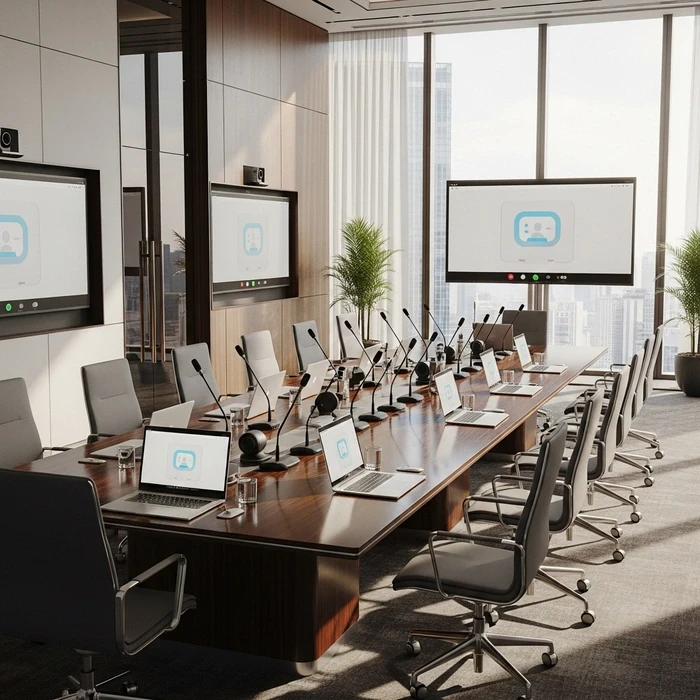
Here is the uncomfortable truth. Most corporate hybrid events in the UAE overspend by 20-30% because the budget was built for a single-format event, not two simultaneous audience experiences. The in-person plan gets drafted first. The virtual layer gets bolted on. And suddenly, costs spiral because nobody mapped the line items unique to hybrid delivery.
This guide gives you the hybrid event pricing breakdown you actually need. Every cost category. Every hidden fee. Every lever you can pull to protect margin. Whether you are producing a product launch at Madinat Jumeirah or a leadership summit at the Riyadh Front, this framework applies.
What Does a Hybrid Event Budget Actually Include in 2026?
A complete hybrid event budget includes dual-track costs: physical venue and production on one side, virtual platform and livestream infrastructure on the other. Most budget overruns happen because planners treat the virtual component as an add-on rather than a parallel production with its own line items.
Core Line Items Most Planners Underestimate
A corporate hybrid event budget template should contain at minimum 35-40 distinct line items. These break into six categories:
Venue and hospitality (site hire, F&B, branding, on-site staffing)
AV and stage production (camera package, audio package, graphics package, lighting, LED walls)
Virtual production (livestream encoding, switching, platform hosting, virtual engagement tools)
Speaker and talent (fees, speaker kits, travel, shipping)
Technology infrastructure (internet and bandwidth, redundancy lines, on-site IT support)
Operations and contingency (agency fees, project management, insurance, contingency buffer)
Each category has both fixed and variable elements. Ignoring this distinction is the single biggest budgeting mistake in hybrid delivery.
The Hidden Costs That Blow Budgets Apart
Three costs consistently blindside first-time hybrid planners in the Gulf region.
First, internet and bandwidth upgrades at hotel venues. Properties like the Conrad Abu Dhabi Etihad Towers or The St. Regis Riyadh often charge AED 8,000-15,000 for dedicated fiber lines beyond standard Wi-Fi. Without them, your livestream drops.
Second, rehearsal costs. A hybrid event demands a full technical rehearsal that an in-person event does not. Budget a minimum of one full day for crew, platform testing, and speaker run-throughs.
Third, licensing fees for music, branded content, and platform plugins. These are easy to overlook and expensive to resolve after the fact.
How Do Fixed vs Variable Costs Shape Hybrid Event Pricing?
Fixed costs cover venue hire, base AV packages, and platform licensing. Variable costs scale with attendance, including per attendee pricing for catering, virtual access, and engagement features. Understanding this split determines whether your budget survives scope changes.
Fixed Costs: What Stays Constant Regardless of Attendance
Fixed costs typically represent 55-65% of total hybrid event costs for a mid-scale corporate event in the UAE. These include:
Venue hire (day rate for the physical space)
Base AV and stage build (core camera package, audio package, lighting rig)
Platform annual or event license (most providers charge a flat event fee)
Crew mobilization (travel, accommodation, per diems for technical crew)
Project management and agency fees
These costs exist whether 50 or 500 people attend. Locking them early protects you from last-minute inflation, especially during Q4 peak season in Dubai and Doha.
Variable Costs: Where Per Attendee Pricing Gets Complex
Variable costs scale with headcount, but the scaling differs for in-person versus virtual audiences.
For in-person attendees, variable costs include catering, printed materials, badge production, and gifting. In the UAE market, expect AED 250-600 per head for a half-day corporate seminar at a five-star venue.
For virtual attendees, per attendee pricing varies by platform. Some charge per concurrent viewer. Others charge per registered user. The difference can be a 40% cost swing. Clarify this before you sign any platform contract.
Flaash Expert Insight: Always negotiate platform pricing on a "concurrent viewer" model rather than "registered" model. For most corporate events in the Middle East, actual virtual attendance runs 55-65% of registrations. This single negotiation point can save 25-30% on your platform spend.
What Are the Real AV and Production Costs for Hybrid Events?
Hybrid event AV cost typically runs 2x to 2.5x the equivalent in-person-only production because you are building two experiences: a stage show and a broadcast. Budget AED 80,000-250,000 for a single-day corporate hybrid event in the UAE, depending on production complexity.
Camera, Audio, and Graphics Packages
A baseline camera package for hybrid includes three cameras: one wide, one tight on stage, and one for audience reaction shots. Expect AED 15,000-30,000 per day for a three-camera setup with operators.
The audio package must serve both the room and the stream. A separate broadcast audio mix is non-negotiable. Room audio compromises always degrade the virtual experience. Budget AED 8,000-18,000 for a dual-mix setup.
Your graphics package covers lower thirds, transitions, pre-roll content, and branded overlays for the stream. This typically runs AED 10,000-25,000 depending on animation complexity.
Crew Day Rates and Rehearsal Costs in the UAE
Crew day rates in the UAE range from AED 2,500-4,500 per technician per day. A standard hybrid production requires 8-12 crew members: camera operators, audio engineers, a vision mixer, a stream technician, a lighting designer, and a floor manager.
Do not forget rehearsal costs. A technical rehearsal day carries the full crew rate. For a three-day event (one rehearsal, two live days), crew costs alone can reach AED 80,000-120,000. This is where many budgets crack because the rehearsal day was never scoped.
Speaker Kits and Shipping Logistics
If remote speakers present into your hybrid event, each needs a speaker kit: a webcam, microphone, ring light, and branded backdrop. A quality kit costs AED 1,500-3,000 per speaker. Factor in shipping costs and lead times, particularly for speakers based outside the GCC. DHL express to European capitals runs AED 400-700 per kit with 3-5 day delivery.










How Should You Budget for Event Platforms and Livestream Production?
Event platform pricing ranges from AED 5,000 for basic webinar tools to AED 75,000+ for enterprise-grade hybrid platforms with networking, analytics, and engagement modules. The right choice depends on your hybrid event technology stack requirements.
Event Platform Pricing Models
Three pricing models dominate the market in 2026:
Per-event licensing: A flat fee per event, typically AED 15,000-40,000. Best for organizations running fewer than four hybrid events per year.
Annual subscription: AED 50,000-150,000 per year for unlimited events. Cost-effective if you run monthly or quarterly programs.
Usage-based: Charges based on viewer hours or active participants. Unpredictable but sometimes cheaper for small, focused board meetings or executive roundtables.
Livestream Production Cost Benchmarks
Livestream production cost is separate from the platform fee. This covers encoding hardware, streaming software, a dedicated stream operator, and backup redundancy.
For a reliable single-stream output, budget AED 12,000-25,000 per event day. For multi-track streaming with breakout rooms, that climbs to AED 30,000-50,000.
Harvard Business Review's research on running effective hybrid meetings confirms what production teams on the ground already know: the virtual audience tolerates zero technical failures. Your stream infrastructure must be bulletproof.
Flaash Expert Insight: At venues in Lusail, Qatar, and KAFD in Riyadh, always order a redundant internet line from a second ISP. Primary line failures during peak-hour events happen more often than venue sales teams will admit. The cost of a backup line (AED 3,000-6,000) is trivial compared to losing your virtual audience entirely.
What Cost-Saving Strategies Actually Work for UAE Hybrid Events?
The most effective hybrid event cost-saving tips involve consolidating vendors, right-sizing bandwidth, renegotiating platform models, and building contingency discipline rather than cutting production quality. Cutting visible quality destroys engagement metrics.
Consolidate Vendor Contracts
Using a single production partner for AV, livestream, and platform management eliminates coordination overhead and duplicate agency fees. In the Dubai market, integrated hybrid production firms typically offer 15-20% savings versus managing three separate vendors.
When planning your hybrid corporate event, request bundled proposals. Compare the total cost, not individual line items.
Right-Size Your Internet and Bandwidth
Over-specifying bandwidth is a common waste. A single 1080p livestream requires 5-10 Mbps of dedicated upload. Most venues sell 100 Mbps packages when 50 Mbps with QoS prioritization is sufficient. Ask your production partner to specify exact requirements before the venue upsells you.
Negotiate Licensing and Agency Fees
Agency fees in the Gulf typically run 15-20% of total production cost. Negotiate a flat project fee instead of a percentage. On a AED 500,000 hybrid event, this single change can save AED 25,000-40,000.
Platform licensing renewals are also negotiable. Committing to a multi-event annual deal during Q1 often unlocks 10-15% discounts as providers look to lock revenue early.
How Do You Calculate Cost Per Engaged Attendee and Prove ROI?
Cost per engaged attendee divides total hybrid spend by the number of attendees who performed a meaningful action: asked a question, visited a booth, downloaded content, or completed a poll. This metric matters far more than raw headcount.
Building the ROI Framework
Raw attendance is a vanity metric. A 1,000-person virtual audience where 80% remain passive delivers less value than 300 actively engaged participants.
Track these metrics to prove hybrid event ROI:
Cost per engaged attendee (total budget divided by actively engaged participants)
Pipeline generated per dollar spent
Content shelf life (how long recorded sessions continue generating leads)
Sponsor value delivered versus committed
Using hybrid event KPIs tied directly to business outcomes transforms your budget from an expense report into an investment case.
The Contingency Rule
Always hold 8-12% of total budget as contingency. In the Middle East market, last-minute scope changes, visa complications for international speakers, and freight delays are not exceptions. They are the norm. A UAE hybrid event budget without contingency is not a budget. It is a guess.
Flaash Expert Insight: Build your contingency as a visible line item, not a hidden buffer spread across categories. When stakeholders see it explicitly, they are far less likely to reallocate it to "nice-to-have" additions mid-project. Protect this number like revenue.
Your Next Move
You now have the hybrid event budget framework that separates controlled spend from budget chaos. Every line item. Every cost lever. Every benchmark grounded in Gulf market reality. The difference between a hybrid event that delivers ROI and one that hemorrhages cash is never the total spend. It is the precision of the plan behind it.
If you are building a hybrid program for 2026 in the UAE, Saudi Arabia, or Qatar, Flaash sources and manages the full production chain: venues, AV, platforms, and crew. One partner. One budget. No surprises.
FAQ: hybrid event budget
How much does a hybrid event cost on average?
A hybrid event typically costs between $5,000 and $100,000, depending on scale, venue, and technology. Small corporate meetings are at the low end; large conferences with advanced streaming and production are at the high end.
What are the main cost components of a hybrid event budget?
Main components: venue rental, audio‑visual equipment, live‑streaming technology, virtual platform licensing, catering, speaker fees, on‑site staffing, content production, and post‑event analytics.
Are hybrid events cheaper than fully in‑person events?
Not always. Hybrid events require both physical and digital infrastructure, so costs can equal or exceed fully in‑person events. They often deliver higher ROI by enlarging reach without proportionally increasing venue or catering costs.
How should I allocate my hybrid event budget across in‑person and virtual elements?
A common starting split is ~60% in‑person and ~40% virtual/production, but adjust based on expected remote vs. onsite attendance and the level of digital engagement you plan to offer.
How can I reduce costs when planning a hybrid corporate event?
Reduce costs by selecting venues with built‑in AV, using one reliable streaming platform, repurposing recorded sessions for marketing, and negotiating speaker/tech packages. Compare venues and bundled services to save.
What hidden costs should I watch for in a hybrid event budget?
Watch for internet bandwidth upgrades, licensing for engagement tools, last‑minute technical support, video editing for on‑demand replays, and travel/allowances. Build a 10–15% contingency fund.
Recent Posts


Load More Blogs