
-
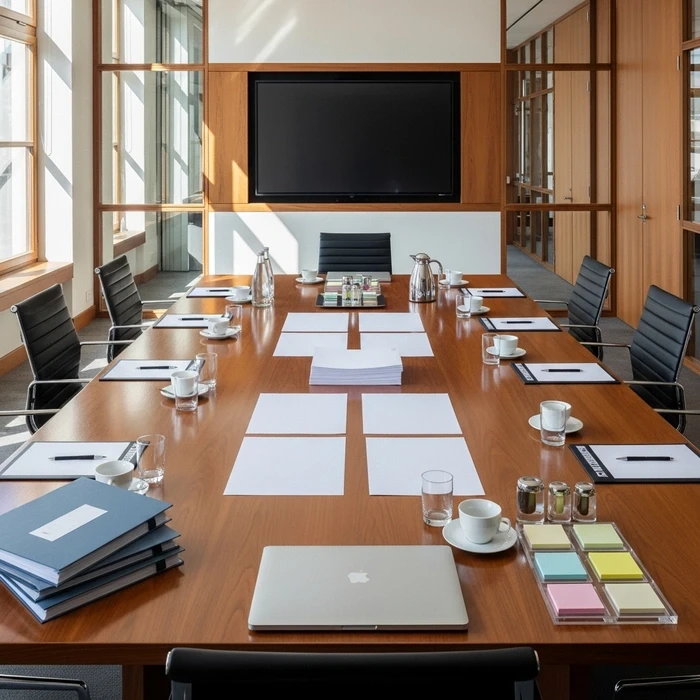
Here is a frustrating reality. Your company invests six figures into a three-day leadership program. You book the venue, fly in the facilitator, and pull 40 senior managers off the floor. By Day 2, half the room is checking emails. By Day 3, energy is gone. Within a month, retention is negligible.
This is not a facilitation problem. It is a planning problem.
As Harvard Business Review has documented, organizations waste billions annually on learning and development that fails to change behaviour. The root cause is almost always structural: unclear objectives, poor session sequencing, misaligned logistics, and venues that work against the learning experience rather than for it.
If your role requires you to plan multi-day corporate training programs for teams in the UAE, Saudi Arabia, or Qatar, this guide is built specifically for you. We break down the exact planning process from needs assessment through post-training reinforcement, with a focus on what actually works in the Middle East's corporate environment.
No theory. No filler. Just the operational playbook that L&D leads, HR directors, and operations managers across the GCC are using right now.
Why Do Most Multi-Day Corporate Training Programs Fail Before They Start?
Most multi-day training programs fail because organizations skip the strategic groundwork entirely. Without a formal needs assessment, clearly defined learning objectives, and documented stakeholder alignment, even the most experienced facilitators cannot produce measurable outcomes from a multi-day investment.
The Misalignment Between Business Goals and Learning Objectives
This is the number one failure point. A department head requests "leadership training." The L&D team books a provider and schedules three days. But nobody defines what leadership competency gap the program is supposed to close.
Learning objectives must be specific, measurable, and directly tied to a business outcome. "Improve middle management decision-making speed by 20% within Q3" is an objective. "Leadership development" is not.










The corporate training planning process must begin with this clarity. Otherwise, you are building a program on assumptions. Every downstream decision, from curriculum design to venue format, flows from the objectives you define at the start.
Skipping the Needs Assessment
A proper needs assessment surveys the target audience, evaluates current skill levels, and identifies the gap between present state and desired state. In practice, fewer than 30% of organizations in the GCC conduct a formal needs assessment before designing a training program.
This step is non-negotiable for multi-day programs. When you are asking participants to commit two to five days, the content must feel immediately relevant. If it does not, disengagement starts within the first 90 minutes.
Gallup's research on employee development confirms that employees who feel their development is relevant to their role show significantly higher engagement and performance. Relevance is not a nice-to-have. It is the foundation of every effective corporate training schedule.
The Cost of Poor Upfront Planning
A poorly planned three-day training in Dubai can cost AED 150,000 to AED 400,000. Factor in venue hire, facilitator fees, catering, materials, AV, travel, and lost productivity. That entire investment is wasted when the program lacks clear structure and defined outcomes.
The corporate training checklist begins well before logistics. It begins with strategy. Get that wrong and no amount of operational excellence can save the program.
How Do You Build a Training Program Timeline That Actually Works?
A reliable training program timeline spans 8 to 12 weeks minimum and moves through four distinct phases: discovery and stakeholder alignment, content development and facilitator briefing, logistics lock-in with participant communications, and final rehearsals with contingency planning.
Phase 1: Discovery and Stakeholder Alignment (8 to 12 Weeks Out)
This is where you define the program's purpose and gain organizational buy-in. Key actions include:
Conducting the needs assessment with department leads and a sample of target participants
Defining learning objectives tied directly to business KPIs
Identifying and vetting the right facilitator or training provider
Setting the budget envelope and securing the approval chain
Selecting target dates while avoiding regional holidays like Ramadan, UAE National Day, and Hajj season in KSA
In Saudi Arabia, corporate training schedules must account for the Kingdom's workweek structure and prayer time breaks. In Qatar, Q4 is peak conference season, which drives venue demand and pricing up significantly.
Phase 2: Content Development and Facilitator Briefing (6 to 8 Weeks Out)
Once objectives are locked, the curriculum design process begins. This phase includes:
Structuring the program into daily modules and individual sessions
Applying adult learning principles such as experiential learning, spaced repetition, and problem-based scenarios
Designing pre-work materials to ensure participants arrive with baseline knowledge
Preparing the facilitator briefing document, which outlines audience profile, organizational context, cultural considerations, and desired outcomes
The briefing document is critical for external facilitators working in the Middle East. Cultural norms around hierarchy, gender-mixed sessions, and language preferences between English and Arabic must be addressed before content is finalized.
Flaash Expert Insight: When booking external facilitators for programs in KSA, confirm visa processing timelines at least 6 weeks in advance. Entry requirements for business visitors have shifted several times under Vision 2030 regulatory updates, and last-minute visa issues can derail your entire training schedule.
Phase 3: Logistics Lock-In and Participant Communications (4 to 6 Weeks Out)
This is where multi-day training program planning moves from strategy to operations. Key tasks include:
Venue confirmation and AV requirements sign-off
Hotel room blocks for out-of-city participants
Catering arrangements covering dietary, cultural, and allergy requirements
Participant communications including invitations, pre-work distribution, travel logistics, dress code guidance, and agenda overview
Printing or preparing digital materials and handouts
Resource planning for on-site coordination staff and support personnel
Do not underestimate participant communications. A well-informed attendee arrives engaged. A poorly briefed attendee arrives confused and resistant.
Phase 4: Final Week Rehearsals and Contingency Checks
In the final five to seven days before the program, conduct a full operational walkthrough:
Confirm the training run of show with the venue team and AV provider
Test all technology including projectors, microphones, and video conferencing for hybrid participants
Brief on-site staff on the daily schedule, room layout changes, and emergency procedures
Prepare a risk management plan covering facilitator illness, AV failure, participant no-shows, and weather disruptions
The training program timeline is not a suggestion. It is your insurance policy against chaos.
What Should a Multi-Day Training Program Agenda Include?
A strong training program agenda balances structured content delivery with active participation across every day. Each day should follow a clear energy arc including opening energizers, core content blocks, interactive breakout sessions, and reflective closers.
Day-by-Day Session Sequencing
Session sequencing is where most multi-day programs either succeed or collapse. Front-load foundational concepts on Day 1. Build complexity and practice through the middle days. Close with application, action planning, and accountability.
Day 1: Foundation and Context Setting
Welcome, introductions, and program overview (30 min)
Keynote or scene-setting presentation (60 min)
Self-assessment exercise aligned to learning objectives (45 min)
Group discussion and expectation alignment (45 min)
Afternoon deep-dive workshop on core concepts (120 min)
Day 1 reflection and preview of Day 2 (15 min)
Day 2: Skill Building and Applied Practice
Morning energizer and structured Day 1 recap (20 min)
Core skill workshop with regional case studies (150 min)
Breakout sessions for small group application exercises (90 min)
Peer feedback rounds and facilitator debrief (60 min)
Evening networking or team dinner, highly effective in GCC corporate culture
Day 3: Application and Action Planning
Morning recap and integration exercise (30 min)
Real-world scenario simulation using participants' actual challenges (120 min)
Individual action plan development with facilitator coaching (60 min)
Group presentations and peer accountability commitments (60 min)
Program close, evaluation forms, and next steps briefing (30 min)
For a detailed framework on structuring your training program agenda day by day, see our guide to multi-day training agenda design.
Balancing Plenary Sessions and Breakout Sessions
Adults retain more when they process information actively. For every 60 minutes of plenary content, plan at least 30 minutes of breakout or application time. Breakout sessions transform passive listeners into active practitioners who test concepts against their own experience.
In the Middle East, breakout session design should also account for language dynamics. In mixed Arabic-English groups, providing bilingual facilitation guides and allowing groups to work in their preferred language increases participation significantly.
Building in Buffer Time and Energy Management
Multi-day workshop planning demands respect for human energy patterns. Schedule 15-minute buffers between major sessions. Plan a mid-morning and mid-afternoon break with quality refreshments. In the UAE and KSA, afternoon energy dips are pronounced, particularly during warmer months.
Never schedule a passive lecture immediately after lunch. The 13:30 to 15:00 slot should feature high-energy, interactive formats like simulations, group exercises, or competitive team activities.
Flaash Expert Insight: For corporate training programs running across multiple days in the UAE, schedule the most demanding cognitive sessions before 12:00 PM. Use the post-lunch window exclusively for interactive formats. This single scheduling decision consistently produces higher end-of-day evaluation scores across programs we support.
How Do You Manage Training Program Logistics Across Multiple Days?
Training program logistics for multi-day events demand detailed coordination across AV systems, catering operations, room configuration changes, attendance tracking, and on-site staff management.
AV, Connectivity, and Room Configuration
Technology failures are the fastest way to lose a room. Your AV checklist should include:
Reliable, high-speed Wi-Fi with bandwidth for simultaneous device connections
A backup laptop preloaded with all presentations and a spare clicker
Wireless microphones, both lapel and handheld for audience Q&A
Video conferencing setup if any participants join remotely
Recording capability if sessions need archiving for compliance
Room configuration should change across days to match the session format. Day 1 might use theatre-style seating. Day 2 shifts to cabaret rounds for group work. Day 3 returns to a U-shape for presentations. Use a comprehensive AV readiness checklist to ensure nothing is overlooked.
Catering, Breaks, and Participant Wellbeing
Catering for multi-day programs in the Middle East demands precision and cultural awareness. Halal compliance is standard, but also account for vegetarian, vegan, and allergen-free options for international participants. Arabic coffee and dates service is culturally expected in KSA and Qatar. Place hydration stations inside the training room, especially during warmer months.
Do not schedule more than 6.5 hours of active content per day. Participants who feel overloaded check out mentally.
Attendance Tracking and On-Site Coordination
Attendance tracking is essential for compliance-driven training programs. Use digital check-in tools rather than paper sign-in sheets for speed, accuracy, and exportable reports.
Assign at least one dedicated on-site coordinator per group. Their job is to manage room transitions, liaise with venue staff, handle participant queries, and keep the program on schedule. This role is completely distinct from the facilitator.
What Role Does Venue Selection Play in Corporate Training Success?
Venue selection directly impacts participant engagement, facilitator effectiveness, and overall program ROI. Natural light improves focus. Acoustic isolation prevents distraction. Comfortable seating reduces fatigue. Dedicated breakout spaces enable small group work without noise bleed.
What to Look for in a Training Venue Across the UAE, KSA, and Qatar
UAE (Dubai and Abu Dhabi): Dubai Knowledge Park and DIFC remain popular hubs. Hotels like Jumeirah Emirates Towers and Conrad Abu Dhabi Etihad Towers offer dedicated conference floors with flexible layouts and integrated AV.
KSA (Riyadh and Jeddah): The King Abdullah Financial District in Riyadh is emerging as a premium corporate training hub. Prayer room availability and gender-specific session considerations must be factored into floor planning from the outset.
Qatar (Doha): Post-2022, Doha benefits from surplus high-quality corporate event infrastructure. The West Bay business district offers properties like The St. Regis Doha with training-ready meeting spaces.
Hotel-Based Venues vs. Purpose-Built Training Centres
Hotel-based venues offer accommodation, catering, and meeting space under one roof, eliminating transit friction. Purpose-built training centres offer superior AV infrastructure and room flexibility but may lack on-site accommodation. The right choice depends on your agenda structure, participant profile, budget, and logistics requirements.
Flaash Expert Insight: In Qatar during Q4, high-demand venues in the West Bay district fill 4 to 5 months in advance due to overlapping international conference season. If your multi-day training falls between October and December, begin your venue search no later than June.
If you are comparing options for smaller training groups, browse meeting rooms in the UAE. For larger corporate learning events, workshops, or combined seminar formats, explore seminars, conferences, and meeting rooms in the UAE.
A Practical Corporate Training Checklist for Multi-Day Programs
A strong corporate training checklist keeps your team aligned and reduces last-minute issues. Use this simple framework.
Strategy Checklist
Define business goals and learning objectives
Complete a needs assessment
Confirm target audience and participant profile
Set success metrics and evaluation approach
Approve budget and timeline
Program Design Checklist
Finalize curriculum design
Build the training program agenda
Confirm session sequencing
Prepare pre-work
Align on post-training reinforcement
Logistics Checklist
Confirm venue, dates, and room setup
Review AV requirements and test plan
Organize catering and dietary requests
Arrange accommodation and transport if required
Assign on-site support roles
Set up attendance tracking
Prepare signage, materials, and name badges
Communication Checklist
Send invitations and joining instructions
Share agenda and timing clearly
Distribute pre-reading or assignments
Provide venue maps and dress code guidance
Set expectations for punctuality and participation
On-the-Day Checklist
Run the facilitator briefing
Review the training run of show
Test microphones, screens, and laptops
Confirm break timings with the venue
Prepare backup files and emergency contacts
Collect evaluation forms daily
Example: A 3-Day Corporate Training Planning Process
To make the planning process more practical, here is a simple example for a regional company running a three-day management training in Dubai for 30 participants from the UAE, Saudi Arabia, and Qatar.
Program Goal
Improve manager capability in delegation, feedback, and team performance conversations.
Planning Approach
Week 10: Conduct stakeholder interviews and define learning objectives
Week 8: Finalize facilitator and start curriculum design
Week 6: Confirm venue, room layout, and catering
Week 5: Send participant communications and assign pre-work
Week 3: Lock AV setup and breakout requirements
Week 1: Run final checks, facilitator briefing, and contingency planning
Sample Agenda Structure
Day 1: Foundations of performance management and communication
Day 2: Coaching practice, role-play, and breakout sessions
Day 3: Real-case application, personal action plans, and manager commitments
Venue Requirements
Main room for 30 participants in cabaret layout
Two breakout rooms for small-group activities
Strong Wi-Fi and presentation screens
Catering for coffee breaks and lunch
Easy access for participants arriving from the airport or city offices
This is exactly where venue choice affects delivery. A room that is too formal, too small, or poorly equipped will create friction throughout the program.
How to Reduce Risk in Multi-Day Workshop Planning
Even well-designed training programs can fail if simple operational risks are ignored. Risk management should be part of every multi-day workshop planning process.
Common Risks to Plan For
Facilitator flight delays
Low participant attendance
AV failure
Internet connectivity issues
Last-minute room changes
Food service delays
Weather disruptions affecting travel
Practical Risk Management Actions
Keep digital and printed copies of all materials
Have a backup laptop, adapters, and clicker on site
Confirm venue contacts for each day and each shift
Build time buffers into the corporate training schedule
Prepare an alternate session plan if a speaker is delayed
Reconfirm participant attendance 48 hours before Day 1
A simple contingency plan can protect both the learning experience and the budget.
How Do You Reinforce Learning After the Program Ends?
Post-training reinforcement is where long-term value is created. Without follow-up, most participants return to daily pressure and old habits.
Reinforcement Methods That Work
Send key takeaways and slides within 24 hours
Schedule manager follow-up discussions within 2 weeks
Use short virtual refresh sessions after 30 days
Share job aids, checklists, or templates
Track action plan progress after 60 and 90 days
The goal is not to repeat the training. It is to help participants apply it consistently in their day-to-day work.
If your program includes remote participants or follow-up virtual sessions, it is worth reviewing best practices for hybrid corporate event planning.
How Flaash Helps You Source Corporate Training Venues in the Middle East
Flaash helps companies across the UAE, Saudi Arabia, and Qatar find and compare suitable corporate venues quickly. Instead of spending days contacting hotels and training spaces one by one, teams can submit a brief and receive tailored proposals matched to their needs.
Why Companies Use Flaash
Access to a large network of corporate venues across the Middle East
Tailored venue proposals based on group size, layout, budget, and training format
Faster comparison of pricing, availability, and inclusions
Support from venue-finding experts who understand corporate event requirements
No cost for the user
This matters when you are managing a complex corporate training planning process and need to move quickly. Flaash helps reduce sourcing time so your team can focus on content, participants, and delivery quality.
Whether you need a training room in Dubai, a residential learning setup in Riyadh, or a conference-ready venue in Doha, Flaash can help shortlist practical options that fit your program goals.
Final Thoughts
To plan multi-day corporate training programs efficiently, start with strategy before logistics. Define the business need. Build clear learning objectives. Create a realistic training program timeline. Design a strong training program agenda. Choose a venue that supports the experience rather than limiting it. Then reinforce learning after the final session ends.
The companies that get the best return from training are not always the ones spending the most. They are the ones planning the most carefully.
If you want to save time sourcing the right venue for your next program in the UAE, Saudi Arabia, or Qatar, Flaash can help you compare suitable options quickly, with tailored proposals and no cost to your team.
FAQ: plan multi-day corporate training programs
How do I plan a multi-day corporate training program for teams in the UAE, Saudi Arabia, or Qatar?
Start with clear learning objectives and participant profiles, then design a day-by-day agenda with blended formats (presentations, workshops, practice), secure experienced facilitators, book a venue with AV and breakout spaces, arrange accommodation/catering, and set evaluation metrics and follow-up activities.
How long should a multi-day corporate training program be?
Most programs run 2–5 days: 2–3 days for skill-focused workshops, 3–5 days for leadership or certification courses; structure each day with 60–90 minute learning blocks, regular breaks, and an end-of-day recap.
What type of venue works best in the Gulf markets (UAE, Saudi Arabia, Qatar)?
Choose hotels or dedicated conference/training centres that offer reliable AV, high-speed Wi‑Fi, multiple breakout rooms, on-site accommodation, halal catering and prayer facilities; in-city venues in Dubai, Riyadh, Jeddah or Doha reduce travel time and improve attendance.
How can I keep participants engaged across multiple days?
Vary delivery with microlearning, hands-on exercises, group projects, case studies from local markets, daily action plans and short energizers; ensure content is practical, culturally relevant and delivered in the preferred language (Arabic and/or English).
What local logistics and compliance should I consider when planning in the UAE, Saudi Arabia and Qatar?
Check public holiday calendars and local working schedules, allow time for visas/entry requirements, provide halal catering and prayer breaks, respect cultural norms around gender and meeting etiquette, and confirm any corporate or government approval needed for external training.
How much should I budget for a multi-day corporate training program in the Gulf region?
Costs vary by venue standard, facilitator fees, group size and included services: budget options start low per participant/day, mid-range programs are moderate, and premium full-service packages command higher rates—request detailed local quotes from venues and providers to estimate total spend.


Recent Posts

Load More Blogs