
-
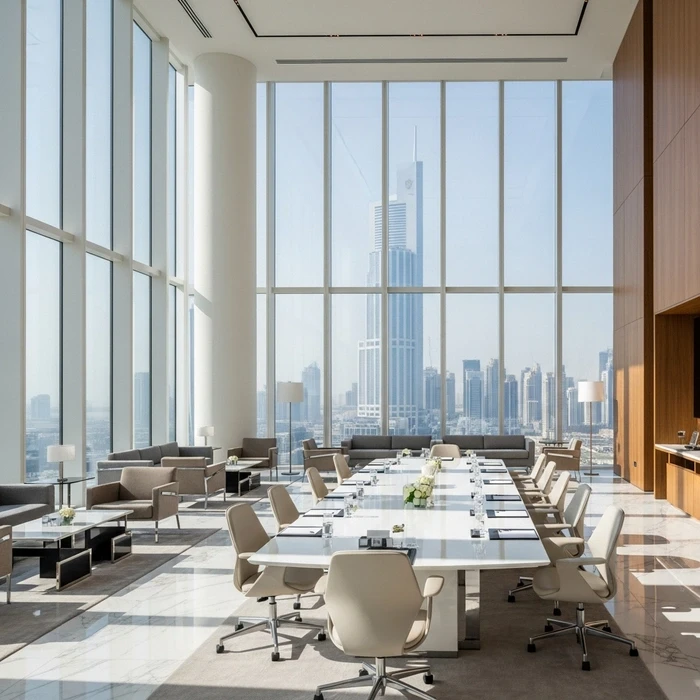
You finalized a venue for a product launch at a major Dubai hotel. Two weeks before load-in, AED 45,000 in "supplementary charges" surfaced, buried in clause 14.3 of the agreement. You had zero leverage to push back.
This scenario repeats across the UAE every quarter. Corporate planners in Dubai, Abu Dhabi, and across the Gulf routinely absorb five-figure overruns tied to contract terms they never challenged. The venues are not the problem. The gap is that most organizations treat venue contract negotiation UAE engagements like standard hotel bookings rather than commercial procurement.
This guide dissects every UAE corporate event venue contract terms clause that shapes your budget, risk exposure, and operational control. Whether you are contracting with The Ritz-Carlton DIFC, Jumeirah Emirates Towers, or The St. Regis Saadiyat Island, these frameworks apply across the region.
What Core Terms Should Every UAE Corporate Event Venue Contract Include?
A robust UAE venue contract must address seven pillars: payment schedule, cancellation terms, force majeure, attrition, minimum spend, liability and indemnity, and vendor exclusivity. Omitting any single area creates direct budget exposure and operational blind spots for corporate event teams.
The Seven Pillars of a UAE Venue Agreement
Most international hotel groups operating in the UAE, including Marriott, Hyatt, and IHG, use proprietary contract templates. These templates favor the venue. Your job is to rebalance them.
The seven non-negotiable areas are:
Payment schedule and deposit structure
Cancellation policy with tiered refund windows
Force majeure clause with clearly defined triggers
Attrition clause protecting against no-shows
Minimum spend commitments and what counts toward them
Liability caps, indemnity, and damages allocation
Vendor exclusivity and preferred suppliers mandates
Why Template Contracts Fail Corporate Planners
Hotel-issued contracts protect the venue's revenue. They rarely account for the complexity of a corporate seminar, gala, or board meeting. Items like branding restrictions, permits responsibility, and change orders are either vague or entirely absent.
Before you redline a single clause, conduct a thorough site inspection to verify the venue's physical and operational capabilities match the contract promises. A site visit exposes discrepancies no PDF floor plan will reveal.
How Should You Structure a Venue Payment Schedule in the UAE?
UAE venues typically require a 25-50% deposit upon signing, with the balance due 14-30 days pre-event. Negotiating milestone-based payments tied to deliverables rather than calendar dates gives your finance team stronger control over cash flow and accountability.
The Standard UAE Payment Model
The default venue payment schedule UAE follows a three-stage model:
Deposit: 25-50% at contract execution
Second installment: 25-30% at 30-60 days before the event
Final settlement: Balance plus actuals, 7-14 days post-event
Properties like Address Sky View, Conrad Abu Dhabi Etihad Towers, and Hilton Riyadh each apply slight variations. Always confirm whether VAT is included or added on top. The UAE's Federal Tax Authority VAT framework applies a 5% standard rate that venues sometimes exclude from initial quotes. This alone can shift your budget by tens of thousands of dirhams.
Milestone-Based Payment: A Stronger Alternative
Push for payments tied to deliverable milestones rather than arbitrary dates. For example, release the second installment only after the venue confirms AV setup specifications, floor plan approval, and catering menu sign-off. This shifts accountability squarely to the venue and creates documented checkpoints your procurement team can audit.
Flaash Expert Insight: Always request that your deposit is refundable within a defined window, typically 60-90 days before the event. In Dubai and Abu Dhabi, most four- and five-star properties will agree to a 50% deposit refund at the 90-day mark if you negotiate before signing.
What Should a Corporate Event Cancellation Policy and Force Majeure Clause Cover?
A well-drafted cancellation policy uses tiered refund percentages tied to specific cut-off dates, while a force majeure clause must list explicit triggers such as government-mandated restrictions, pandemics, and civil unrest. Both clauses require mutual application to be enforceable.
Tiered Cancellation Structures
The standard corporate event venue cancellation policy UAE model follows this pattern:
120+ days out: 75-100% refund of deposit
60-119 days out: 50% refund
30-59 days out: 25% refund
Under 30 days: No refund
These are starting positions, not final terms. Negotiate broader windows, especially for large-scale corporate galas or product launches with long lead times. Always verify whether cancellation terms reference cut-off dates based on the event date or the written notice date. That distinction matters.
Force Majeure: Get Specific or Get Burned
Generic force majeure clause UAE events language like "acts of God" is dangerously insufficient. Post-2020, every major hotel group updated their templates. Many still use vague definitions that protect only the venue.
Your clause should explicitly reference:
Government-imposed gathering restrictions
Travel bans affecting 30% or more of confirmed attendees
Venue structural damage or safety closure orders
Pandemic or epidemic declarations by WHO or UAE authorities
Critically, force majeure protections must be mutual. If the venue can invoke the clause to cancel without penalty, your organization must hold the same right under identical conditions.
Postponement vs. Cancellation
Negotiate a postponement option as an alternative to outright cancellation. Many venues in Dubai's DIFC district and Abu Dhabi's Saadiyat Island will agree to a 12-month rebooking window with no additional cost. This preserves the commercial relationship and protects your sunk costs.
How Do Attrition Clauses and Minimum Spend Requirements Affect Your Budget?
Attrition clauses penalize you for falling below guaranteed attendee or room-night counts, while minimum spend commitments set a floor on total expenditure. Both require tight negotiation to avoid paying for services your organization never consumed.
Understanding Attrition in UAE Venue Contracts
An attrition clause UAE events typically allows a 10-20% shortfall against your guaranteed numbers before penalties kick in. Anything beyond that threshold triggers charges, often at 80-100% of the per-head rate for the entire shortfall gap.
For a board meeting at Palazzo Versace Dubai or a seminar at Madinat Jumeirah Conference Centre, a 20% attrition cushion is standard. For larger-scale corporate events, push for 25%. Document the penalty calculation method explicitly. Ambiguity here costs real money.
Minimum Spend: What Counts and What Does Not
Venue minimum spend UAE clauses define the total revenue the venue expects from your event. This typically includes F&B, room hire, and AV rental. It often excludes third-party vendor spend and external catering.
Negotiate to include:
Accommodation revenue from room blocks
Sponsored bar and beverage tabs
Branding and signage fees charged by the venue
Parking and valet packages
The broader the inclusion criteria, the easier it becomes to hit the threshold without inflating your actual program costs. Using AI-driven procurement tools can model these scenarios before you commit to a number.
Flaash Expert Insight: In Saudi Arabia, particularly at properties like The Ritz-Carlton Riyadh and Rosewood Jeddah, minimum spend thresholds during Q4 can increase by 30-40% due to peak season demand. Lock your rates and minimums at least six months in advance.
What Hidden Costs and Vendor Exclusivity Rules Should You Negotiate?
Hidden costs in UAE venue contracts typically include overtime rates, corkage fees, security costs, cleaning fees, and branding restrictions. Vendor exclusivity clauses can force you into the venue's preferred suppliers at premium rates, severely limiting your procurement leverage.
The Most Common Hidden Line Items
Even seasoned planners get caught by these charges:
Overtime rates: Staff surcharges beyond standard event hours, usually triggered after 11 PM
Corkage: Fees for bringing external beverages into licensed venues
Security costs: Mandatory for events at properties in Abu Dhabi Global Market and DIFC
Cleaning fees: Applied to events with complex stage builds or exhibition-style setups
Branding restrictions: Limitations on external signage, banner placement, and digital screen usage
Request a complete fee schedule as a contract annex. If a cost is not documented in writing, it does not exist in your agreement.
Vendor Exclusivity and Preferred Supplier Mandates
Most five-star UAE hotels enforce vendor exclusivity for AV, catering, and florals. This means you cannot bring external suppliers without paying a surcharge, or cannot bring them at all.
Effective counter-strategies include:
Negotiating a "right to bring" clause for your AV and production vendors
Requesting the venue's preferred suppliers list upfront and comparing catering quotes before committing
Capping any external vendor surcharge at 10-15% of the vendor's total invoice
Permits and Regulatory Responsibility
Clarify who holds permits responsibility in the contract. Events at non-hotel venues in Dubai Design District or Alserkal Avenue often require municipal permits, DTCM approvals, or civil defense clearances. The contract must state whether the venue or the client bears this obligation and its associated costs.
The UAE's consumer protection regulations provide baseline rights, but contractual terms typically supersede general guidelines in B2B agreements. Know exactly what you are signing.










Who Bears Liability, and What Event Insurance Requirements Apply?
UAE venue contracts allocate liability through indemnity clauses and liability caps, while most properties require clients to carry event-specific insurance covering third-party injury and property damage. Failing to address this exposes your organization to uncapped financial risk.
Liability Caps and Indemnity Structures
Standard venue contracts in the UAE place liability caps on the venue's exposure. This limit is often set at the total contract value. Meanwhile, the client's indemnity obligation is frequently uncapped, creating a dangerous asymmetry.
Rebalance this by:
Requesting mutual liability caps at 100-150% of total contract value
Limiting your indemnity to losses caused by your organization's direct negligence
Excluding consequential damages from both parties' exposure
Event Insurance Requirements in the UAE
Event insurance requirements UAE standards vary by property and emirate. At minimum, expect venues to require:
Public liability coverage of AED 5-10 million
Property damage coverage for the venue's own assets
Employer's liability for your on-site staff and contractors
Properties in Qatar, particularly around Lusail and West Bay, increasingly mandate event cancellation insurance as well. Work with a UAE-based broker who understands regional market conditions and venue-specific requirements.
SLA and Performance Guarantees
Your contract should include SLA commitments for critical services. These cover AV setup timelines, F&B service ratios, room turnaround schedules, and dedicated event manager availability. Without documented SLAs, you have no contractual basis for compensation when the venue underdelivers.
Leveraging AI-powered contract review tools can flag missing SLA benchmarks and non-standard risk language before you sign.
Flaash Expert Insight: When negotiating contracts for events at Abu Dhabi's Yas Island venues or ADNEC, request the venue's own insurance certificate. Confirm their coverage does not create gaps that your organization's policy is silently expected to fill.
The Bottom Line for Corporate Event Teams
Every clause in a UAE venue contract is a negotiation opportunity. The organizations that control costs and reduce event risk treat venue agreements as strategic procurement documents, not administrative paperwork.
Review every term. Redline every imbalance. Whether you are sourcing venues across Dubai, Abu Dhabi, Riyadh, or Doha, bring the same rigor to your contract negotiation that you apply to every other seven-figure procurement decision.
Flaash sources, negotiates, and manages venue contracts for corporate teams across the Middle East. If your next event demands precision, start with the contract.
Appendix: Comparison of Key UAE Venue Contract Clauses Across Major Hotel Groups
Hotel Group | Payment Schedule | Cancellation Policy | Force Majeure | Attrition Clause | Vendor Exclusivity | Liability & Indemnity |
|---|---|---|---|---|---|---|
Marriott (Ritz-Carlton, St. Regis) | 30% deposit, 30% 60 days out, balance pre-event | Tiered refunds: 75% (120+ days), 50% (60-119), 25% (30-59), none (<30) | Venue-favored, generic triggers; mutuality negotiable | 10-15% cushion, penalties at 90-100% per-head | Strict for AV/catering; external vendor surcharge 15% | Venue capped at contract value; client indemnity often uncapped |
Jumeirah Group | 25% deposit, 25% 45 days out, balance 14 days pre-event | Similar tiered structure; more flexible for large events | Updated post-2020; explicit pandemic/government triggers possible | 15-20% cushion, penalties at 80-100% per-head | Preferred suppliers list; external vendor approval required | Mutual caps negotiable; consequential damages often excluded |
Hilton (Conrad, Waldorf Astoria) | 40% deposit, 30% 30 days out, balance 7 days pre-event | Strict tiered refunds; cut-off based on written notice | Venue-centric; mutuality requires negotiation | 10% cushion, penalties at 100% per-head | Mandatory use of in-house AV/catering; surcharges for exceptions | Venue liability capped; client indemnity broad unless limited |
IHG (InterContinental, Crowne Plaza) | 30% deposit, 30% 60 days out, balance 14 days pre-event | Flexible for repeat clients; standard tiered refunds | Explicit triggers possible; mutuality on request | 15% cushion, penalties at 90% per-head | Preferred suppliers; external vendor surcharge 10-15% | Mutual caps possible; indemnity limited to direct negligence |
Use this table to benchmark and negotiate the most critical contract terms with your chosen UAE venue.
FAQ: uae corporate event venue contract terms
What should a UAE corporate event venue contract include?
A UAE corporate event venue contract should include the booking date, venue fees, payment schedule, cancellation policy, liability clauses, and permitted use of the space. It should also outline catering arrangements, audio-visual provisions, overtime charges, and force majeure terms to protect both parties.
What is the standard cancellation policy for corporate event venues in the UAE?
Most UAE corporate event venues enforce a tiered cancellation policy based on how far in advance notice is given. Cancellations made 90 days or more before the event typically incur a smaller penalty, while those within 30 days may result in forfeiture of the full deposit or total booking fee.
How much deposit do corporate event venues in the UAE typically require?
UAE corporate event venues generally require a deposit ranging from 25% to 50% of the total venue hire cost upon signing the contract. The remaining balance is usually due between 14 and 30 days before the event date, though terms can vary between hotels, conference centres, and standalone venues.
Can you negotiate contract terms with a corporate event venue in the UAE?
Yes, most corporate event venue contract terms in the UAE are negotiable, especially for large-scale bookings or recurring events. Companies often negotiate on pricing, minimum spend requirements, overtime fees, and cancellation flexibility. Working with a venue-finding service can help secure more favourable terms across multiple properties.
Are there hidden fees in UAE corporate event venue contracts?
Hidden fees are common in UAE venue contracts and may include service charges of 10% to 15%, municipality fees, security deposits, overtime surcharges, and setup or breakdown costs. Always request an itemised cost breakdown before signing so that every additional charge beyond the base venue hire fee is clearly disclosed.
What does a force majeure clause cover in a UAE event venue contract?
A force majeure clause in a UAE event venue contract covers unforeseeable circumstances such as natural disasters, government restrictions, or public health emergencies that prevent the event from taking place. This clause typically allows either party to postpone or cancel the booking without financial penalty when such events occur.

Recent Posts


Load More Blogs