
-
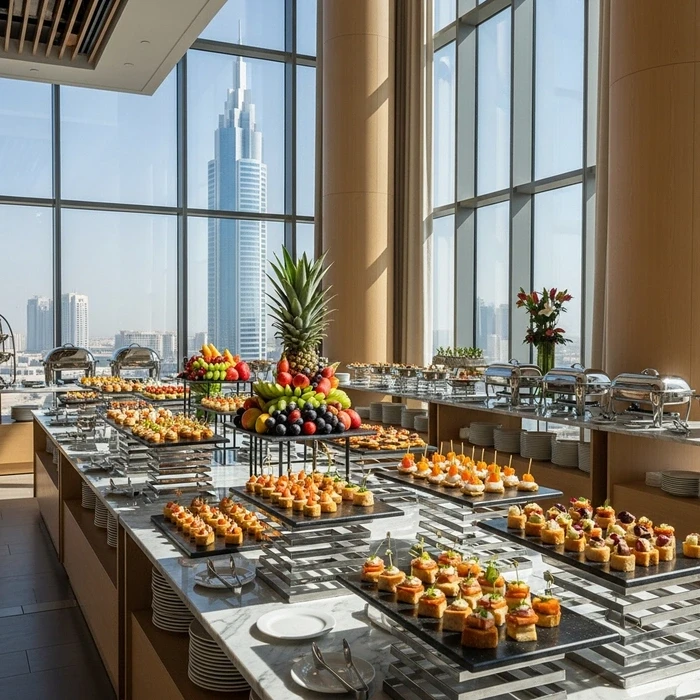
One underperforming caterer at a 300-guest gala in DIFC can erase six months of brand positioning. That is not an exaggeration. It is the operational reality that procurement leads and event directors confront every quarter across the Gulf.
Corporate event catering UAE sits at the intersection of cultural protocol, regulatory compliance, and logistical precision. Most global catering playbooks fail to account for the region's unique layering of Halal compliance, multinational guest demographics, and municipality-level food licensing. The margin for error in this market has never been thinner.
This guide is not a surface-level overview. It is a practitioner-grade framework for the professionals who evaluate, contract, and manage catering operations for seminars, product launches, awards galas, and executive boardroom functions. Every section addresses the real questions that arise during the sourcing and execution cycle — from RFP design to day-of execution to post-event performance review.
If you hold responsibility for corporate events in the UAE, Saudi Arabia, or Qatar, this is your operational reference document.
What Makes Corporate Event Catering in the UAE Uniquely Complex?
The UAE's corporate catering landscape demands simultaneous compliance with Halal regulations, multinational dietary protocols, municipality food-safety standards, and venue-specific operational restrictions — creating a convergence of requirements that very few other global markets replicate at this intensity.
Regulatory and Cultural Layers Most Planners Underestimate
Every corporate caterer operating in Dubai, Abu Dhabi, or the Northern Emirates must hold a valid municipality food trade license. Beyond that baseline, food safety certifications such as HACCP are table-stakes requirements for any reputable supplier. What catches many international planners off guard is the layering effect.
A caterer serving a conference at a five-star hotel in Downtown Dubai may need the hotel's own vendor accreditation, a Dubai Municipality permit for off-site food preparation, and documentation confirming full Halal supply chain compliance. All of this must be in place before a single tray reaches the service line.
Cultural expectations compound the regulatory requirements. Alcohol-paired menus demand separate licensing. Arabic coffee service follows specific hospitality customs with precise sequencing. VIP guest protocols often dictate the service style and plating order. None of this is optional. It is baseline professionalism in the Gulf corporate market.
Venue-Specific Restrictions That Shape Your Catering Model
Not every venue permits external catering. Hotels such as the Jumeirah Emirates Towers and the Address Sky View in Downtown Dubai typically mandate their in-house catering teams for banquet functions. Free-zone venues in DWTC (Dubai World Trade Centre) or ADNEC (Abu Dhabi National Exhibitions Company) may allow approved external caterers, but they impose strict setup and breakdown windows, waste management protocols, and staffing credential checks.
Understanding these restrictions early prevents the most common procurement bottleneck: selecting a caterer who cannot physically operate at your chosen venue. This is the first filter to apply when shortlisting corporate catering services Dubai providers and vetting suppliers across the wider Emirates.
The Seasonality Factor: Q4 and Ramadan Planning Windows
Q4 remains the most congested period for corporate events in the UAE. October through December sees overlapping demand from GITEX, COP-related summits, Abu Dhabi Finance Week, and a surge in year-end corporate galas. Premium catering suppliers operate at near-full utilization during this window. Lead times for bespoke corporate catering packages extend significantly — securing a preferred caterer for a November gala often requires confirmed bookings by July.
Ramadan introduces a separate operational framework entirely. Iftar corporate functions have grown into a significant category. Suhoor-to-Iftar timing constraints reshape kitchen production schedules. The expectation for generous, culturally refined menus raises both cost and complexity for the procurement team.
Flaash Expert Insight: For Q4 events in Dubai or Abu Dhabi, lock your catering supplier with a signed BEO no later than 16 weeks before the event date. In peak years, 20-week lead times are standard for top-tier suppliers operating at full allocation.
How Should You Structure a Catering RFP Template for UAE Corporate Events?
A UAE-specific catering RFP template must extend well beyond standard menu requests. It should mandate Halal certification documentation, venue access logistics, allergen management protocols, staffing ratio commitments, and measurable SLA benchmarks for service timing and food quality.
The Non-Negotiable Sections of a Regional RFP
A poorly structured RFP produces vague proposals that are impossible to compare on equal terms. The strongest catering RFP template formats used by Gulf-based procurement teams include these mandatory sections:
1. Event Profile and Scope. Date, venue, expected headcount, event format (seated dinner, networking reception, multi-day conference), and defined service windows.
2. Menu Requirements. Specify cuisine direction, mandatory Halal sourcing documentation, dietary requirements coverage (vegan, gluten-free, nut-free, pescatarian), and whether live cooking stations or pre-plated service is required.
3. Allergen Management Protocol. Request the caterer's documented allergen management process. Cross-contamination at a 500-person product launch is both a reputational and a legal liability. This is not a line item to overlook.
4. Operational Logistics. Venue access windows, on-site kitchen availability, power and water supply requirements, setup and breakdown schedules, and waste removal responsibilities.
5. Staffing Plan. Required staffing ratios (industry benchmark: 1 server per 10-12 guests for seated service, 1 per 15-20 for buffet), uniform standards, and language capabilities for bilingual service.
6. Compliance Documentation. HACCP certification, municipality trade license, vendor accreditation status for the venue (if applicable), and public and product liability insurance.
7. SLA and Performance Metrics. Define measurable standards. Food served within a specified window of scheduled time. Minimum temperature thresholds. Guest complaint resolution process. Penalty clauses for material non-compliance.
Structuring the Scoring Matrix
Weight your evaluation criteria before distributing the RFP. A proven and effective split for UAE corporate events:
Menu Quality and Creativity: 25%
Compliance and Certification: 20%
Operational Plan and Logistics: 20%
Cost and Value: 20%
References and Track Record: 15%
This weighting ensures you are not simply selecting the cheapest bid. In a market where food safety incidents or cultural missteps carry outsized consequences, compliance and operational reliability must carry equal weight to cost.
Common RFP Mistakes in the Gulf Market
The most frequent error is issuing a generic, region-agnostic RFP. Suppliers in the UAE expect and respect RFPs that demonstrate local market knowledge. Failing to specify Halal chain-of-custody requirements, ignoring venue-specific loading dock schedules, or omitting Ramadan timing considerations signals inexperience. This often results in inflated proposals, as caterers price in a risk premium for perceived client disorganization.
What Does a Comprehensive Event Catering Checklist Cover?
A complete event catering checklist spans five distinct phases — procurement, menu development, logistics, on-site execution, and post-event review — with each phase containing specific verification milestones anchored to the Banquet Event Order.
Phase 1: Procurement and Shortlisting
Your event catering checklist begins well before the first tasting session. Start with foundational verification:
Confirm a valid municipality food license and current HACCP certification.
Verify the caterer has operated at your selected venue before, or can obtain vendor accreditation within the required timeline.
Request a minimum of three corporate references within the same event category (gala, seminar, product launch).
Confirm insurance coverage: both public liability and product liability with adequate limits.
Phase 2: Menu Development and Tasting
The catering tasting checklist is a critical quality gate. Never finalize a catering contract without a formal tasting. During the session, evaluate these dimensions:
Assess each dish for presentation, temperature integrity, and portion size aligned with portion planning guidelines for the event format.
Test the caterer's ability to execute dietary requirement variants (vegan, allergen-free) at the same quality level as the primary menu.
Review plating style and service ware. Does it match the event's production design and brand standards?
Confirm the caterer's documented approach to event catering menu planning across multiple courses and parallel dietary streams.
Phase 3: Logistics and Operational Planning
Finalize the BEO (Banquet Event Order) with the caterer and venue operations team. This document is the single source of truth for all parties.
Confirm setup and breakdown windows with the venue coordinator.
Verify power supply specifications for any mobile on-site kitchen equipment being transported in.
Map the complete last-mile logistics route: from the caterer's commissary kitchen to the venue's loading dock to the final service area.
Confirm waste management protocols and which party holds removal responsibility.
Phase 4: Day-Of Execution Verification
Conduct a pre-service briefing with the catering team lead 90 minutes before doors open.
Verify food temperatures and plating against every line item in the BEO.
Ensure allergen signage is visible at all buffet stations and live cooking points.
Confirm staffing ratios match the contracted plan. Count heads. Do not assume.
Phase 5: Post-Event Review and Documentation
Collect guest feedback specific to food and beverage within 48 hours of the event.
Review the caterer's performance against the SLA benchmarks defined in the contract.
Document lessons learned and feed them into the procurement criteria for future cycles.
Flaash Expert Insight: Request a "blind tasting" format where dishes are served without labels or identification. This reveals whether dietary-specific options meet the same quality standard as main menu items — a gap that frequently appears with less experienced UAE catering suppliers.
How Do You Approach Event Catering Menu Planning for Multinational Corporate Audiences?
Effective menu planning for UAE corporate events requires a modular design system: a core menu satisfying the majority of guests, supported by clearly labeled dietary streams that address Halal, vegetarian, vegan, and allergen-free needs without fragmenting the overall guest experience.
The Modular Menu Framework
The UAE's corporate population is among the most diverse on the planet. A single 200-person conference at a seminar venue in the Emirates might include guests from over 30 nationalities. A one-size-fits-all buffet is lazy strategy. A 15-option sprawl is operationally risky and wasteful.
The modular approach strikes the right balance:
Core Menu (serves 70-80% of guests). Build around universally accepted proteins and preparations. Grilled chicken, seafood, and rice-based dishes perform consistently well across Gulf corporate events. Full Halal compliance operates at the core level — this is the default, not an add-on.
Dietary Stream A (Vegetarian and Vegan). Design dishes that stand on their own merit. Roasted cauliflower steaks, hearty grain bowls with tahini, and elevated mezze platters execute well and align with regional palate preferences.
Dietary Stream B (Allergen-Managed). Nut-free, gluten-free, and dairy-free options must be prepared in separate kitchen zones or staggered time windows to prevent cross-contamination. Require the caterer to document the full allergen management chain of custody.
VIP and Executive Menu (if applicable). For board dinners or C-suite networking events, a curated fine-dining menu replaces the modular system. Here, service style shifts to plated, multi-course formats with paired beverages — non-alcoholic or licensed alcohol-inclusive depending on venue and event licensing.
Portion Planning by Event Format
Portion planning errors rank among the top three catering complaints in the UAE corporate circuit. The formulas differ substantially by format:
Seated Dinner: 3-4 courses, 350-450g total food weight per guest.
Standing Reception: 8-12 canape pieces per guest per hour, plus 1-2 substantial bowl food stations.
Full-Day Conference: Budget for AM break, lunch, and PM break. Overweight the PM break. Energy dips are real, and coffee alone does not solve the problem.
Regional Palate Intelligence
Successful event catering menu planning in this market requires genuine palate intelligence. Arabic, South Asian, and East Asian flavor profiles dominate guest preferences across the UAE. Caterers who default to Western European menus without regional adaptation lose relevance quickly.
Incorporate regional staples with sophistication: saffron-infused rice, slow-cooked lamb preparations, fresh labneh, and date-based desserts signal cultural awareness. At an awards dinner or networking gala, this attention to detail is what separates a forgettable meal from one that reinforces brand sophistication.
What Criteria Separate Premium UAE Catering Suppliers from the Rest?
Top-performing UAE catering suppliers distinguish themselves through five measurable dimensions: certification depth, venue access breadth, staffing consistency, creative menu flexibility, and fully transparent cost structures — not simply menu variety or brand recognition.
Certification and Compliance Depth
Entry-level caterers hold a basic food trade license. Premium operators maintain current HACCP certification, carry adequate public and product liability insurance, and produce Halal supply chain documentation on request — not a PDF from three years ago, but a current, independently audited record.
For events at regulated venues like NEMA conference and event facilities or ADNEC, verify that shortlisted caterers hold venue-specific vendor accreditation. This accreditation process can take 4-8 weeks. It must be initiated early in the procurement timeline.
Venue Access and Operational Range
A caterer who excels in a hotel ballroom may underperform in a raw-space venue at Alserkal Avenue or an outdoor setup on Saadiyat Island. Evaluate suppliers based on the specific venue types your organization uses. Request case studies at comparable locations — not simply a logo-heavy client list.
Corporate event catering criteria should include whether the supplier owns or leases mobile kitchen infrastructure. Caterers who depend entirely on venue-provided kitchens sacrifice flexibility. Suppliers who operate self-contained commissary models and mobile on-site kitchen units offer significantly more operational resilience, particularly for product launches in unconventional spaces. The best corporate catering services in Dubai invest heavily in this mobile capability, giving them a measurable edge during high-demand periods.
Staffing Consistency and Dedicated Teams
Staff turnover in the UAE hospitality sector runs high. Premium caterers invest in dedicated corporate event teams rather than pulling from a rotating casual labor pool. Ask your shortlisted suppliers directly:
What is their server retention rate over the past 12 months?
Do they conduct event-specific briefings, or rely on generic service protocols?
Can their team deliver bilingual service (English and Arabic at minimum)?
Staffing ratios must be contractually locked, not estimated. If your BEO specifies a 1:10 server-to-guest ratio for a seated gala, the contract should include a financial penalty clause for understaffing.
Cost Transparency and Hidden Charges
Corporate catering packages in the UAE range from AED 150 to AED 800+ per head depending on format, menu complexity, and venue requirements. The price itself matters less than the transparency of the breakdown.
Demand itemized quotes that separate food cost, labor, equipment rental, transport, setup and breakdown, and waste management fees. Caterers who bundle everything into a single per-head rate are often masking thin staffing plans or lower-grade ingredients beneath a clean number.
How Do You Manage On-Site Execution and Last-Mile Catering Logistics?
On-site catering execution in the UAE hinges on three controllable variables: last-mile transport integrity, venue-specific setup compliance, and real-time communication protocols between the catering team lead, event manager, and venue operations coordinator.
Last-Mile Transport: The Most Overlooked Risk
The gap between the commissary kitchen and the venue service area is where food quality degrades. In Dubai, traffic patterns between Jebel Ali industrial zones — where many catering commissaries are based — and Downtown or DIFC venues can add 45-90 minutes of transit during peak hours. In Abu Dhabi, the journey from Mussafah to Yas Island involves similar time variability.
Last-mile logistics planning must account for:
Temperature control. Refrigerated transport for cold items. Insulated containers with real-time temperature logging for hot items.
Traffic contingency. Build a minimum 30-minute buffer into every delivery window. For Q4 events, extend that buffer to 60 minutes.
Loading dock scheduling. Many premium venues allocate fixed loading dock time slots. Miss your assigned window, and your delivery waits while perishables degrade.
Setup Compliance and Venue Coordination
Every venue enforces its own rules for setup and breakdown operations. Hotel properties typically mandate strict timelines — a 7:00 PM gala dinner may require full kitchen setup completion by 4:00 PM with no exceptions. Exhibition venues may restrict forklift access during concurrent events in adjacent halls.
The BEO should include a detailed run-of-show timeline that aligns catering setup milestones with the broader event production schedule. Sound checks, AV rigging, floral installations, and catering setup frequently compete for the same physical space and time windows. Pre-coordinating these elements eliminates the most common day-of failures.
Real-Time Communication Protocols
Designate a single point of contact between the catering team and your event management lead. Dual reporting lines create confusion under pressure. The catering captain should have direct radio or phone contact with the event manager — not relay messages through a middleman chain.
Pre-agree on escalation triggers before the event day. What happens if a dietary stream runs short at 70% service? What is the protocol if a guest reports an allergic reaction? What is the contingency if a critical piece of kitchen equipment fails? These scenarios must be documented in the SLA and rehearsed during the pre-event briefing.
Waste Management and Sustainability Accountability
Waste management is no longer a footnote in the catering brief. UAE regulations around food waste have tightened considerably, and many corporate clients now require sustainability reporting from catering partners. Both the Abu Dhabi and Dubai municipalities have increased enforcement around commercial food waste disposal and documentation.
Request your caterer's waste management plan as a standard RFP deliverable. The plan should cover food donation protocols — Ne'ma, the UAE's National Food Loss and Waste Initiative, provides a formal framework — packaging disposal procedures, and post-event cleanup standards. For organizations reporting on ESG metrics, catering waste data feeds directly into scope 3 emissions reporting.
Flaash Expert Insight: Always request a "cost-per-component" breakdown alongside the standard per-head rate. This structure allows you to negotiate individual line items — upgrading the dessert station while trimming an unnecessary second carving station — rather than accepting or rejecting the entire catering package as a fixed unit.
The Operational Advantage
Corporate event catering in the Middle East is a discipline, not a procurement line item. The organizations that treat it as a strategic function — with rigorous RFP processes, data-backed supplier evaluation, and performance-locked SLAs — consistently deliver superior guest experiences while keeping cost and risk within controlled boundaries.
This framework is designed to be used, not bookmarked. Extract the checklists. Adapt the RFP structure to your organization's procurement workflow. Apply the corporate event catering criteria to your next supplier shortlist. Pressure-test every caterer against the standards outlined here before you sign a single contract.
Flaash sources the venues where exceptional corporate catering becomes operationally possible. Start with the right space, and every decision that follows gets easier.










How Do You Approach Event Catering Menu Planning for Multinational Corporate Audiences?
Effective menu planning for UAE corporate events requires a modular design system: a core menu satisfying the majority of guests, supported by clearly labeled dietary streams that address Halal, vegetarian, vegan, and allergen-free needs without fragmenting the overall guest experience.
The Modular Menu Framework
The UAE's corporate population is among the most diverse on the planet. A single 200-person conference at a seminar venue in the Emirates might include guests from over 30 nationalities. A one-size-fits-all buffet is lazy strategy. A 15-option sprawl is operationally risky and wasteful.
The modular approach strikes the right balance:
Core Menu (serves 70-80% of guests). Build around universally accepted proteins and preparations. Grilled chicken, seafood, and rice-based dishes perform consistently well across Gulf corporate events. Full Halal compliance operates at the core level — this is the default, not an add-on.
Dietary Stream A (Vegetarian and Vegan). Design dishes that stand on their own merit. Roasted cauliflower steaks, hearty grain bowls with tahini, and elevated mezze platters execute well and align with regional palate preferences.
Dietary Stream B (Allergen-Managed). Nut-free, gluten-free, and dairy-free options must be prepared in separate kitchen zones or staggered time windows to prevent cross-contamination. Require the caterer to document the full allergen management chain of custody.
VIP and Executive Menu (if applicable). For board dinners or C-suite networking events, a curated fine-dining menu replaces the modular system. Here, service style shifts to plated, multi-course formats with paired beverages — non-alcoholic or licensed alcohol-inclusive depending on venue and event licensing.
Portion Planning by Event Format
Portion planning errors rank among the top three catering complaints in the UAE corporate circuit. The formulas differ substantially by format:
Seated Dinner: 3-4 courses, 350-450g total food weight per guest.
Standing Reception: 8-12 canape pieces per guest per hour, plus 1-2 substantial bowl food stations.
Full-Day Conference: Budget for AM break, lunch, and PM break. Overweight the PM break. Energy dips are real, and coffee alone does not solve the problem.
Regional Palate Intelligence
Successful event catering menu planning in this market requires genuine palate intelligence. Arabic, South Asian, and East Asian flavor profiles dominate guest preferences across the UAE. Caterers who default to Western European menus without regional adaptation lose relevance quickly.
Incorporate regional staples with sophistication: saffron-infused rice, slow-cooked lamb preparations, fresh labneh, and date-based desserts signal cultural awareness. At an awards dinner or networking gala, this attention to detail is what separates a forgettable meal from one that reinforces brand sophistication.
What Criteria Separate Premium UAE Catering Suppliers from the Rest?
Top-performing UAE catering suppliers distinguish themselves through five measurable dimensions: certification depth, venue access breadth, staffing consistency, creative menu flexibility, and fully transparent cost structures — not simply menu variety or brand recognition.
Certification and Compliance Depth
Entry-level caterers hold a basic food trade license. Premium operators maintain current HACCP certification, carry adequate public and product liability insurance, and produce Halal supply chain documentation on request — not a PDF from three years ago, but a current, independently audited record.
For events at regulated venues like NEMA conference and event facilities or ADNEC, verify that shortlisted caterers hold venue-specific vendor accreditation. This accreditation process can take 4-8 weeks. It must be initiated early in the procurement timeline.
Venue Access and Operational Range
A caterer who excels in a hotel ballroom may underperform in a raw-space venue at Alserkal Avenue or an outdoor setup on Saadiyat Island. Evaluate suppliers based on the specific venue types your organization uses. Request case studies at comparable locations — not simply a logo-heavy client list.
Corporate event catering criteria should include whether the supplier owns or leases mobile kitchen infrastructure. Caterers who depend entirely on venue-provided kitchens sacrifice flexibility. Suppliers who operate self-contained commissary models and mobile on-site kitchen units offer significantly more operational resilience, particularly for product launches in unconventional spaces. The best corporate catering services in Dubai invest heavily in this mobile capability, giving them a measurable edge during high-demand periods.
Staffing Consistency and Dedicated Teams
Staff turnover in the UAE hospitality sector runs high. Premium caterers invest in dedicated corporate event teams rather than pulling from a rotating casual labor pool. Ask your shortlisted suppliers directly:
What is their server retention rate over the past 12 months?
Do they conduct event-specific briefings, or rely on generic service protocols?
Can their team deliver bilingual service (English and Arabic at minimum)?
Staffing ratios must be contractually locked, not estimated. If your BEO specifies a 1:10 server-to-guest ratio for a seated gala, the contract should include a financial penalty clause for understaffing.
Cost Transparency and Hidden Charges
Corporate catering packages in the UAE range from AED 150 to AED 800+ per head depending on format, menu complexity, and venue requirements. The price itself matters less than the transparency of the breakdown.
Demand itemized quotes that separate food cost, labor, equipment rental, transport, setup and breakdown, and waste management fees. Caterers who bundle everything into a single per-head rate are often masking thin staffing plans or lower-grade ingredients beneath a clean number.
How Do You Manage On-Site Execution and Last-Mile Catering Logistics?
On-site catering execution in the UAE hinges on three controllable variables: last-mile transport integrity, venue-specific setup compliance, and real-time communication protocols between the catering team lead, event manager, and venue operations coordinator.
Last-Mile Transport: The Most Overlooked Risk
The gap between the commissary kitchen and the venue service area is where food quality degrades. In Dubai, traffic patterns between Jebel Ali industrial zones — where many catering commissaries are based — and Downtown or DIFC venues can add 45-90 minutes of transit during peak hours. In Abu Dhabi, the journey from Mussafah to Yas Island involves similar time variability.
Last-mile logistics planning must account for:
Temperature control. Refrigerated transport for cold items. Insulated containers with real-time temperature logging for hot items.
Traffic contingency. Build a minimum 30-minute buffer into every delivery window. For Q4 events, extend that buffer to 60 minutes.
Loading dock scheduling. Many premium venues allocate fixed loading dock time slots. Miss your assigned window, and your delivery waits while perishables degrade.
Setup Compliance and Venue Coordination
Every venue enforces its own rules for setup and breakdown operations. Hotel properties typically mandate strict timelines — a 7:00 PM gala dinner may require full kitchen setup completion by 4:00 PM with no exceptions. Exhibition venues may restrict forklift access during concurrent events in adjacent halls.
The BEO should include a detailed run-of-show timeline that aligns catering setup milestones with the broader event production schedule. Sound checks, AV rigging, floral installations, and catering setup frequently compete for the same physical space and time windows. Pre-coordinating these elements eliminates the most common day-of failures.
Real-Time Communication Protocols
Designate a single point of contact between the catering team and your event management lead. Dual reporting lines create confusion under pressure. The catering captain should have direct radio or phone contact with the event manager — not relay messages through a middleman chain.
Pre-agree on escalation triggers before the event day. What happens if a dietary stream runs short at 70% service? What is the protocol if a guest reports an allergic reaction? What is the contingency if a critical piece of kitchen equipment fails? These scenarios must be documented in the SLA and rehearsed during the pre-event briefing.
Waste Management and Sustainability Accountability
Waste management is no longer a footnote in the catering brief. UAE regulations around food waste have tightened considerably, and many corporate clients now require sustainability reporting from catering partners. Both the Abu Dhabi and Dubai municipalities have increased enforcement around commercial food waste disposal and documentation.
Request your caterer's waste management plan as a standard RFP deliverable. The plan should cover food donation protocols — Ne'ma, the UAE's National Food Loss and Waste Initiative, provides a formal framework — packaging disposal procedures, and post-event cleanup standards. For organizations reporting on ESG metrics, catering waste data feeds directly into scope 3 emissions reporting.
Flaash Expert Insight: Always request a "cost-per-component" breakdown alongside the standard per-head rate. This structure allows you to negotiate individual line items — upgrading the dessert station while trimming an unnecessary second carving station — rather than accepting or rejecting the entire catering package as a fixed unit.
The Operational Advantage
Corporate event catering in the Middle East is a discipline, not a procurement line item. The organizations that treat it as a strategic function — with rigorous RFP processes, data-backed supplier evaluation, and performance-locked SLAs — consistently deliver superior guest experiences while keeping cost and risk within controlled boundaries.
This framework is designed to be used, not bookmarked. Extract the checklists. Adapt the RFP structure to your organization's procurement workflow. Apply the corporate event catering criteria to your next supplier shortlist. Pressure-test every caterer against the standards outlined here before you sign a single contract.
Flaash sources the venues where exceptional corporate catering becomes operationally possible. Start with the right space, and every decision that follows gets easier.
FAQ: corporate event catering UAE
How much does corporate event catering cost in the UAE?
Corporate event catering in the UAE typically costs between AED 80 and AED 500 per person. The price depends on the menu style, cuisine type, number of guests, and whether the venue provides in-house catering or requires an external provider.
What types of catering styles are available for corporate events in the UAE?
The most common catering styles for corporate events in the UAE are buffet, seated plated service, canapé receptions, and live cooking stations. Many venues across Dubai and Abu Dhabi also offer hybrid setups combining multiple styles to suit conferences, galas, or networking events.
Do corporate event venues in the UAE provide in-house catering?
Most corporate event venues in the UAE offer in-house catering managed by their own culinary team. Hotels, convention centres, and dedicated event spaces typically include catering packages, while some venues allow external caterers. Platforms like Flaash help you filter venues based on their catering options.
What cuisines are most popular for corporate event catering in the UAE?
Arabic, international buffet, and fusion menus are the most popular cuisines for corporate event catering in the UAE. Many companies also request Asian, Mediterranean, or themed menus depending on the audience, while halal-certified options remain a standard requirement across nearly all corporate functions.
How far in advance should I book catering for a corporate event in the UAE?
You should book catering for a corporate event in the UAE at least four to eight weeks in advance. For large-scale conferences or gala dinners during peak season, booking two to three months ahead is recommended to secure your preferred venue and menu options.
Can corporate event catering in the UAE accommodate dietary restrictions?
Yes, most corporate event caterers in the UAE accommodate dietary restrictions including halal, vegan, gluten-free, and allergen-specific requirements. It is important to communicate dietary needs during the planning stage so the venue or catering provider can prepare suitable menu alternatives for all attendees.


Recent Posts


Load More Blogs